The Sound of Silence

The Sound of Silence

The first line from the song The Sound of Silence by Simon and Garfunkel is “Hello darkness my old friend I have come to talk with you again”.  Those who are bereaved will understand that conversation we have with that old friend in our life.  Let me introduce you to my old time friend. His name is Grief. He is not my enemy; he is my closest friend and ally. Grief is that old friend that listens to my deepest pains, fears, and sorrows; he is always available day or night.  That friend who came immediately to my side together with his friend Shock. Together they held me up with invisible arms to do the impossible and bury my child.

Grief is an old friend; I invited him to stay with me when my son died.  When the funeral was over and my whopping three days of bereavement leave completed I went back to work. It was time to pull up my boot straps, get busy in my work and let time heal.  I told my friend Grief that although I was grateful for his support to get me through the funeral, there is no way he could come to work with me. It would be embarrassing; people would wonder why he was with me all the time and I would have to try and explain.  He agreed and for the most part Grief stayed home.

Being a good friend Grief honored my request and did not come to work with me those early weeks, but he did not leave altogether. I said he could stay in my son’s old room as long as he needed too.  He stayed to his room for the most part, but I would occasionally find him waiting for me, sitting in the car when I got off work. Sometimes he would even surprise me at work and say “let’s take the day off” and we would. He would seem to know the right time to pounce on me at work and we would go for a walk together, just he and I.

That second year my friend Grief started popping into the office more than before, he showed up at dinners, events, most every movie I went to,  and  he would even surprise me in the shower some mornings and I would lose it completely. In those early years most of our time together was spent kicking back on the couch and having a few beers together and drift /off to the sound of silence. After while he never seemed to leave me alone, at home, at work , at night, I could not get away from him and he was a slob, a slouch and a grouch on a couch.

My friend became my nemesis, my antagonist, he shadowed my day and owned my night and I wanted him to leave, but he stood fast. I began to resent him taking over and controlling my life and leaving it in such a mess. I no longer wanted him as my friend but I had no strength to throw him out so I gave in gave up my control and rested in my own vulnerability to his care.  I gave in to my captor the same as hostage can to their captor. It is not unlike The Stockholm Syndrome where a victim starts to believe the same values as the aggressor, they soon cease to see their captor as a threat and can rest.   So we rest.

Eventually at some indeterminate time Grief started to take a few vacations, longer and longer ones it seemed; sometimes I would not see him for a month. As much as I liked having my own life back, I missed him.  I experienced the very odd feeling of cognitive dissonance  by holding two opposing wishes. It muddled my brain like a difficult conundrum and I just accepted this is my life now. I am grieving. I am crazy. I am lost. My life is a mess and I need my friend.

I knew I could call him if I needed too, but I felt I had already taken advantage of so much of his time that I did not want to  bother him with minor complaints. Oddly he would seem to know the vision that was planted in my brain…and he would show up unannounced when I needed him most and stay as long as I needed him.

Sometimes he would stay for only an hour or two, at times a day or two but seldom longer and not once did we have a beer together.He seems to have grown up a lot; he stands a quite a bit taller now, and has lost a whole bunch of weight and he brought much less baggage than before. He is a whole lot less intrusive and domineering now;he mostly just listens with an understanding smile.

Today he still visits on occasion; he always stops by on his own birthday, most holidays, some weddings and all funerals. Grief is a good friend, he saved my life but in learning to live with him…I have learned to live without him. We do stay in touch however.

If you are lost and  cannot seem to find your friend, please lean on mine until you do, and keep listening to the whispers contained in the sound of silence, it whispers hope.

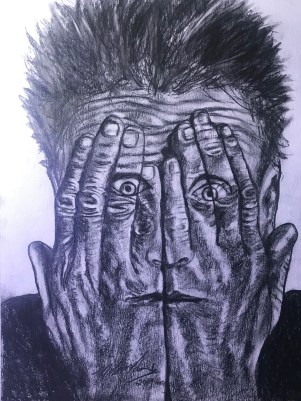
This blog was Inspired by the somewhat dark and haunting version of the song Sound of Silence by the Heavy Metal Band Disturbed.  Please watch, do not let the music genre influence you; do not judge a book by its cover. Albeit sad and morose, it is also hauntingly beautiful. I created a YouTube video  for my channel of the song The Sound of Silence by Disturbed using the ” The Twenty Faces of Grief “. They are pencil portraits that I created whose visual representation is up to the beholder to decide what grief emotion the portrait is trying to relay.

You Tube link : https://www.youtube.com/watch?v=UCtkkmjwd3U


Wombmates untwinned; the enigma of losing a twin

Being born a twin or multiple is a unique experience not afforded most of the population. Although it has been on the rise for the last 30 years, it still only represents 3% of live births in the nation. I was born a twin with my twin sister in 1955 the last of 7 children that my mother gave birth to. I was born a twin, that is all I knew. I was born with a buddy; a relationship I took for granted; I had no idea no one else shared this wondrous kinship which was our world. That is until she died and I was untwinned. As in the lyrics from the old Joni Mitchell song Big Yellow Taxi :…you don’t know what you have till it gone…

On March 23rd of 1984, eleven days after my twin sister Sandy and I celebrated our 29th birthday together; she and her two boys were killed in a terrible auto accident. She left behind a very distraught husband and a set of thirteen-month-old boy/girl twins. This event took the whole family by shock;  We had three caskets in front of the altar. I was devastated and could barely breathe. A short time later my 9 year old son is diagnosed with terminal cancer; I had to breathe; I had to put the grief for my twin and her boys on the back shelf…where it stayed for a long, long, time.

My son Kelly died in 1987 after two years of fighting cancer; it won. I was exhausted and on grief overload and I retreated from the world. Lost for awhile lost in excessive work and alcohol I functioned at a base level. A level where there is no joy, no zest, no initiative, no anticipation, just getting done what had to be done. Apathy ruled the day;tears ruled the night. The alarm clock my nemesis. I was not alright.

Eventually I found my path out the darkness of nights and  processed the grief for my son proactively and shared it with the world publically with a book about our journey. Published in 2002 it propelled me into a world of grief and loss I was unaware even existed. I eventually became a national speaker on grief and loss, presenting Proactive Grieving seminars in almost every major US city with for grief support groups, non profits and foundations.

In 2015 I was asked to speak at the Twinless Twins National conference held in Nashville. This was 30 years following the Death of my twin sister. Most of my presentations in those years were with bereaved parents, as my sisters loss was overshadowed by my son’s loss. My grief for my sister was still on the back shelf. Not forgotten; not denied; but postponed, and delayed. Imprisoned by survival in a purgatory of forgotten dreams and nightmares my grief was filed deeply away in the amygdala of my brain…waiting.

I keynoted about my twin, our life, her death, my life before, my life after, my life today, my hopes for tomorrow.


Shift Happens, a New Normal?

Shift Happens, a New Normal?


I find it fascinating how many new terms, words, phrases that label or identify social constructs/ behaviors that are created every day, phrases that go viral and become mainstream. Viral a word gone viral in and of itself. Right?  You don’t say! See ya, Eh, LOL, OMG, drain the swamp, bless your heart, get out of Dodge, brown nose, red neck, avatar, tree hugger, freel, woke etc., memes/emojis/emoticons,  images as well as created portmanteaus like brunch (breakfast/lunch) Brexit (Britain/Exit);  words blending the sounds and combining the meanings. This happens worldwide but some phrases may be endemic to a geographic area and/or specific to an activity, emotion or defined issue. But all are created shorthand; communication gone viral; good or bad its contemporary vernacular that delivers a message.

Many phrases eventually fall out of use, or change meaning as many words do. Gay was once just happy, queer was odd, just as many other slang, derogatory, and racist terms were created changing the etymology of the word forever. We find that with the internet many of these catch phrases, created labels, and words cross over to another group’s lexicon of terms and becomes part of their vernacular expression.

When one is thrust into the grief journey, most are unprepared for powerful life altering event it can be. When we lose someone we love, especially an out of sequence death it changes our perspective, our world view changes. We are born again into a whole new world, scary and uncharted and many have applied the phrase “the new normal” to describe the grief journey.  I have never liked the word normal as an adjective to describe human behaviors; normal is a setting on a dryer. There is nothing normal about losing a child at any age. It is an out of sequence death where true comprehension of the loss becomes surreal. When negotiating day to day realities we may feel like we are in a fog, a time warp, or bubble of confusing duplicitous perceptions. This cocoon of protection that insulates us from the overwhelming horror of the reality is autonomic and biologic; it lasts as long as it lasts which is different for everyone.

The “New Normal” is a pithy aphorism originated as a term in business and economics that refers to financial conditions following the financial crisis of 2007-2008 and the aftermath of the 2008–2012 global recession. The term has since been used in a variety of other contexts to imply that something which was previously abnormal has become commonplace.  Soon thereafter I saw it applied to grievers and it socially went viral in the grief community and the horse was out of the barn.

In my 30 years of working with the bereaved I have seen the language of grief and loss change in many ways as grievers try to articulate the depth and breadth of their soul wounds. During that period of time I have seen new words created, old words negated, and many words deleted from conversational use.

People are becoming more cognizant of the power of words that can help to heal or ones that can haplessly hurt or are disrespectful.  We innately can respond in a different manner and more compassionate manner, but it takes practice. For example, in response to someone who has taken their own life I previously have said that they had committed suicide. I soon although realized how hurtful that can be to family survivors, as it layers their loved one’s act of desperation with a penumbra a shame, which only perpetuates the stigma surrounding death by suicide.  I started to say “completed suicide” instead because my lips still wanted to say committed but I could easily turn committed into completed. However, I changed my vernacular again to relay just the facts. Died by suicide. Died from heart failure. Died from cancer, auto accident, overdose, murder i.e. just the facts, no judgement, no labels, no shame or stigma attached.  Fortunately, I have seen this changing but not fast enough.

Finding closure. God help us why this deplorable aphorism is still used mainstream. We close a casket; we don’t find closure with their life or their death. We don’t say “we had a child who died, their name was”. We say “our child died their name is “not was. Keeping them in the present tense is part of proactive grieving; they can still co-exist in our lives and in our conversations with others. Our children die a second time when no one speaks their name.

We don’t move on, we move forward; we don’t deny, we postpone; we don’t get over, we transmogrify; we don’t put it behind us, we walk with it; we don’t get on with our life, we explore our new landscape. We recognize that shift happens; a shift of seismic proportions has happened in our life. Recognizing that a permanent shift has occurred, and that life will never be the same empowers forward movement and healing. Grief is a lifelong journey to take as it comes, day by day; if we look too much in the rear view window, we may miss the signs on the road. The road forward has choices with many directions and being present is critical; being retrospective creates wisdom; be hopeful creates intention; being aware creates trust; trust the journey.

Peace love n light
Mitch Carmody


“When we are no longer able to change a situation, we are challenged to change ourselves. Everything can be taken from a man but one thing: the last of the human freedoms—to choose one’s attitude in any given set of circumstances, to choose one’s own way. “                    -Viktor Frankl

Death by Violence Forgive and Forget…is it really possible ?

IMG-7622

In grieving the loss of a loved one, often many things are spoken that are reactionary, spouted most often by rote and not by reason. People may say “I am sorry” for nothing they had any real control over, as in someone else’s loss. We tend to recite some embedded aphorism in a weak attempt to provide consolation to the inconsolable or we throw out a religious quote or two that is expected to provide some modicum of comfort. Most do not. In grief we often find that so many things that we took for granted are completely back-assward. We are thrust into an unknown multi-dimensional world of chaos accompanied by very real but often non-recognizable neuropathic responses beyond our conscious awareness.

Our foray into madness is fueled by the body’s own autonomic reaction to survive and we find that we are at war with our intellect. In a vain attempt to restore order to a system undone and attempt to make a reality out of surrealality we find we are caught in the web of cognitive dissonance; believe/deny? revenge/reconcile? comply/retaliate ? hyperventilate/hibernate ? flight or fight/rest and digest ? anger/apathy ? compassion/collaboration? defensive/defeated? self-care/or self-absorbed? running from/running with? On and on ad nauseum…our psyche is traumatized. How is it possible to forgive and forget? How does one move beyond the hatred and the horror and forgive? With the intensity and sustainability of these emotions, is it even possible? In the case of death from murder and assault this is never more evident. Can we forgive and forget?

Your child goes to school one day, never to return, shot in the head point blank while coloring in her Dora the Explorer coloring book at her kindergarten desk.   A madman shooter ended her life and forever changed her circle of influence.

A terrorist sets a backpack down in a crowd of people, it explodes, and shrapnel sheers the head from your husband’s body, you wake up from a coma a month later and hear both your children are dead.

Following his testimony on clergy abuse for several priests who had sexually abused him as a young boy, this 42-year-old father of two hangs himself in a cheap motel.

Almost 3,000 people died on 9/11 in 2001, just as many orphans left behind. Almost 20 years later the number of 9/11 fallout exposure related deaths of first-responders, firefighters, residents and clean-up workers/volunteers has exceeded that number.

You husband is a Rabbi and is convicted by a group of nefarious zealots for being a Jew and shot to death in the synagogue with other worshipers that were attending service. Your brother was dragged behind a truck and lynched by a mob for smiling at a white woman. Your son is innocently shot in the front yard by a zealous police officer.

Four students on their way to prom killed are instantly killed by a 3-time convicted drunk driver who survived. Bullied for years for being gay your best friend is beaten to death in the school locker room.

Your 9-year-old son never comes home; his bike haplessly left on the side of road, never to be heard of again. Almost 30 years later his body is found, the sexual predator/murderer is forensically tracked down, found and convicted.

Forgive and Forget?

Yeah right. That’s really going to fly.

Almost everywhere in the world linguistically two negatives equal a positive but nowhere in the world does a double positive equal a negative until recently. “Yeah Right” is a double positive.   Yeah right as used here means… highly unlikely. Forgive and forget in many cases is highly unlikely. For one thing neurologically it is impossible to forget especially when you add your own modifier to it as “this is something I need to forget” as it is compartmentalized and placed in a safe spot within the brain for use as a selective quantifier for future survival needs.

Nothing is forgotten. We may lose the keys, our password and cannot gain access but nothing we have experienced is ever forgotten.  We have unlimited storage like RAM on a supercomputer, but we may have emotionally shitty software; our brain is a junk drawer; many things get lost…but not truly forgotten.

It’s easy to say the words “Forgive and Forget” without realizing how ridiculous it really sounds.  It comes out more like goodnight and God bless.  Read the first few paragraphs again and say you could say “I forgive you, and I will forget this ever happened”. This is singularly the biggest crock to come down the pike since the Flat Earth Society was born. It has been propagated, nurtured, promulgated and blindly espoused to since God was a small child. This is pure gastric emulsion of a very large bovine. This is not even a religious construct or unsolicited propaganda, but an autonomic by rote neuropathic response we say from the brain wrinkles that were created our whole life. Forgive, and forget. What does that really mean? Why do we say it?

We have already determined that with our brain it is impossible to forget, granted it can almost be impossible to retrieve much of that data. For example, trying to remember our own birth experience or someone’s phone number from grade school, we cannot recall it, but does not mean the information is not on file. This may happen as well in trauma, and incidences that are emotionally charged with graphic horrific visual/visceral data. Dependent on an individual’s age, physical wounds, resiliency skills, their intellectual ability, their experiential comprehension, and trauma response/ training preparation these memories are stored in different areas of the brain.

We don’t forget it, we de-energize it and put it on a shelf until we can address and process. In cases of heavy trauma and extreme pain the memories of often covered with a veil of forgetfulness. We can remember having a horrific toothache but not the actual intensity of the “just please let me die pain” that we were experiencing. We have trauma receptors to negotiate and store painful memories.

Now let’s move on to the biggest misnomer the verb “Forgive”:    for·give    /fərˈɡiv/

Verb: stop feeling angry or resentful toward (someone) for an offense, flaw, or mistake.

Again, please read the first few paragraphs and say you have stopped feeling resentful towards evil doers. They deserve our anger, they hurt us forever and changed our lives. We are a victim. Let them absorb our anger, let them carry it, it’s not gone, give it up to them to carry. We did not choose to become a victim, it chose us. We become either a victim who is a survivor, or a victim who is a casualty. We will always be a victim when a someone takes our loved one’s life or has assaulted ours. What we do with that victimization is our choice; how we store the trauma is not. It’s a synaptic algorithm based on our personal experiences.

As a victim of a horrible crime, how do we forgive those who assaulted us? In many cases the perpetrator has died with his victims, do we offer them a posthumous reconciliation? Do we pray for their soul’s salvation?   I don’t think so.  For the most part we hope they rot in hell.  A clerical quote states “To err is human to forgive is divine”.  Dahhh.  That is so right on. It is not our job to offer forgiveness for their diabolical acts. That is relegated to a divine responsibility. Our propensity is to err, we are human. People make mistakes easily and most reconcile them. Some humans have no conscious, feel no remorse and will recidivate. Do they deserve forgiveness?

Forgiveness is not meant for assholes, rapists and murderers but is reserved for when someone inadvertently steps on your toes, hurts your feelings or tells a white lie.  Do we let someone off the hook who blatantly took the life of our loved one?

Forgiveness is very complicated; complicated as we are. Language is complicated, words have the power to adequately define and differentiate a feeling or interpretation of events. Forgiveness is a double entendre with two different meanings. One is bestowed by a higher power (on this earth or off earth) known as Charizomai which cancels all debts, wipes the slate clean. This is akin to filing chapter 13 in finances where all debts are forgiven through the power of grace, i.e. a grace period or debt forgiven.  The other is Aphiemi or liberation, a release from bondage, to give up, let go, let free, release its hold. This is where human choice comes in when discerning if or when to provide forgiveness to another human being.

In this case it’s not providing absolution from a victim’s standpoint, as much as it is to release the victim from the clutch of hatred that may keep a victim tethered to the past. It is not forgiveness as much as finding resolution that there is no possible vindication for our loss. Nothing will make it right. Active loathing will destroy us, and we become collateral damage.

We reserve the right not to provide grace and absolution but merely to compartmentalize its angst and anxiety for safe keeping. I am not saying we must bury and fetter our emotions/memories deep within our psyche but conversely to process them fully. To experience, legitimately label, file, and allow them to be stored in areas of the brain to provide us with liberation from the all-consuming hatred, but not necessarily provide forgiveness.

I respect, love and have faith in a higher power, a divinity beyond my comprehension who I know exists because I do. We can forgive others for being ignorant, medicated, stupid, angry, impetuous, mean, greedy, evil, on and on ad infinitum for our own liberation but not for their absolution. That is a job for a higher power, on terra firma or a celestial judge. We have a choice to provide forgiveness or not. You are not a bad person for not forgiving evil and forgiving evil does not make you divine. We have no control over an evil doer’s soul, only our own.

Why is it we are urged to forgive and forget or that we the assume role either as victim or martyr? If we are assaulted, we don’t have to play victim here, we have been victimized, we don’t play martyr, we have been hurt, we suffer. We recognize not pathologize that a shift happens; we remember, we do not forget. We release, but not necessarily provide forgiveness. We rally, or we wither. We are resilient by nature and can rally.  Be your nature. Survival is innate, to thrive is a choice. Experience is our only teacher; living is learning. Ignorance is also a choice; choice is our destiny.

Forgive and Forget? Forgetting is impossible; Forgiveness a choice.

In the case of assault, victim and martyr are both human conditions as a result of malaise and evil intent. This is not a role one takes on; we have been victimized and we suffer.

Post-Traumatic Stress or Post -Traumatic Growth?  Both are possible.

Shift happens regardless.

Peace, love n light

Mitch  Carmody
Being Vulnerable to Joy


11-DSC09246

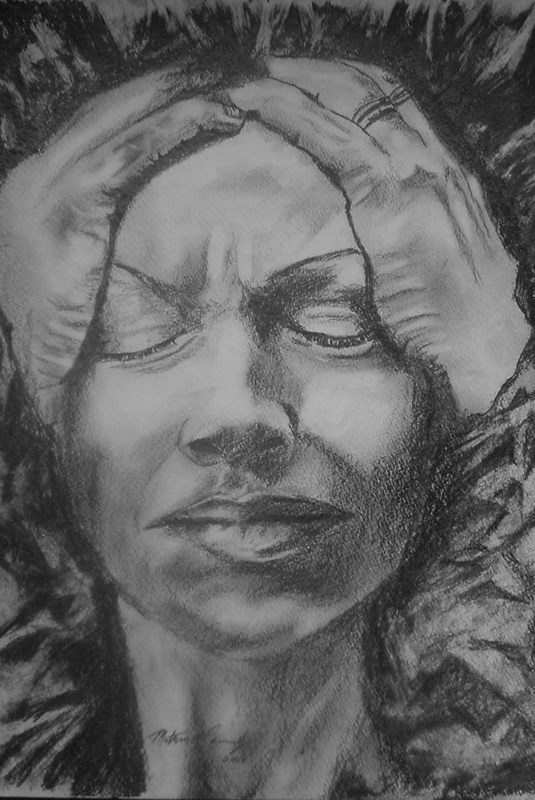
Much is gained, and much healing takes place when the bereaved gather together to compassion each other at a conference or group meeting. In the hundreds of workshops and thousands of individuals I have had to the honor to serve over the past 30 years I have seen folks companioning each other; grievers of all ages, with different demographics and different circumstances surrounding the death of their loved ones. The greatest healing phenomenon that I have discovered among those who grieve is the power of synergy that is created when companioning someone (listening) with an open heart. Synergy happens between to people who are fully engaged and a very real oscillation of energy takes place.


Aristotle described synergy best by saying “The whole is greater than the sum of its parts”. It is an algorithm for healing that we share, whether in conversation, in the arts, or in procreation, we can create something larger than ourselves than we ever could have done independently. When we share our story and share our life with another compassionate heart, synergy happens. Our brains are built with mirror neurons; we cannot help it; if we hear it, see it, feel it, dream it, think it, smell it, or taste it our brain experiences it. We are built for empathy, we are wired for compassion; it’s in our nature.


In our modern society of today, we tend to intellectualize and not actualize our grief. We often discount what our body, spirit, and soul are urging us to do to survive. We hope there is a pill we can take for it. We intellectualize our grief for a quick fix and ignore all the cues we are receiving from our body and spirit who are already processing the trauma stemming from the loss and know all too well there is no quick fix. We are built with all the neurological response resources we need to survive trauma; we heal from the inside out.


The most important psychosocial skill we have is being an active listener. To actively listen to others and be engaged, is to listen with our corporate brain located in the cerebellum. It is our supraphysical inner ear, and just as our physical inner ear does, it will strive to maintain balance. Unplug ego and simply listen to body, spirit and that wee voice within; nurture ways to become still and mono-focused; this calms intellect and fosters neuropathic listening skills for providing balance. Recognize that feeling your body experiences when it is in balance, foster the feeling, and use it to heal.


We without any effort or conscious thought maintain our balance, our blood pressure, our temperature, our heart rate and a million other things without direct thought. We are built to maintain equilibrium, hormonal balance, homeostasis; the yin/yang in action. Imbalance and friction consume energy; balance maintains energy efficiency and restores vital energies that are needed for survival.


With our intellect, we can research and we can provide the best possible means to assist our being in achieving overall balance or wholeness but yet not let it override the supraphysical inkles that we get from our higher (spiritual) and lower (physical) selves. We have choices, we have voices, and we have discernment. In being vulnerable in our decision making we can help build our resiliency in surviving loss; being vulnerable is the greatest act of courage one can experience.


If you feel stuck in your grief, seek a support group that works for you. If you cannot find a support group that works for you, reach out to a good friend and or family member; let them know you need more than a friend; you need a good listener. It does not matter how long it has been or for that matter who listens, as long as they are engaged. Seek counsel at church, civic groups; go to a counselor or seek a therapist. Read books, watch YouTube’s/ Netflix on loss, surf the web for forums and websites dedicated to serving the bereaved. Be good to yourself, find ways that work for you to mourn lament and process your loss.


Include if you can activities in your life that help creates joy in your heart. Be not afraid to celebrate life, yours and the living memory of your loved one. Climb a mountain, start a foundation, give blood, go for walk, forgive an old wound, volunteer time for a worthy cause. Change up vacations and holidays; create a new ritual of mourning, if only for a day or annually. Attend a national conference of The Compassionate Friends or the Bereaved Parents USA national gathering, a conference of the Tragedy Assistance Program for Survivors of Military loss (TAPS), the TwinlessTwins conference, Alive Alone, SOS, POMC et al; look for retreats, seminars that represent similar losses. Grief does not have to be a lonely journey or a life unfinished; joy is our birthright, reclaim your joy and you reclaim your life.


With everything in our body, brain and spirit demanding equilibrium, we can find strength in yielding to its power to survive trauma and loss. Just as equally important in grief and maybe equally as challenging is accessing our vulnerability to experience joy. Joy neurologically excites our endocrine system to reduce pain levels and provides an analgesic calming effect on our body, mind, and spirit.  Be vulnerable to the pain to process your loss, be vulnerable to the joy and celebrate their life. Be Vulnerable to your direction. Be good to yourself.


Come on grief cruise with us, we are all in the same boat but we can choose our own direction. Own your grief; reclaim your Joy, reclaim your life.


In March of 2019, Proactive Grieving is going to sea with Journeys of Hope, Healing and Health presenting Proactive Grieving workshops on board as well 20 other fabulous presenters and light carriers with a focus on healing body, mind, soul, and spirit to empower resiliency and hope in grief.


For more information on this unique opportunity and to register to go to:  https://journeysofhopehealingandhealth.com/form/mitch-carmody


MC 11/16/18

The Virtual Luminescence of Transparency

1-transparency                                                   The Virtual Luminescence of Transparency
The word transparency gets passed around quite often these days in reference to a person’s demeanor, their honesty and clarity when engaged in conversation. To many folks it’s viewed as a negative attribute, with transparency looked at as insipid and viewed as a weakness, letting one’s guard down and being totally vulnerable. To others it’s a positive accolade of brutal honesty and forthright integrity.

In 2017 I turned 62 years old. My father died at age 49 from heart disease, I never thought I would make it this far; my brother died at age 23 from cerebral palsy, I never thought I would make it this far; my twin sister and her 2 sons were killed when she was 29 years old, I never thought I would make it this far; my son died at age 9, I never thought I would make it this far; my youngest grandchild is just turning 9; I never thought I would make it this far. I am now retired and drawing Social Security, I never thought I would make it this far.

I have made it this far, how did that happen?

When my father died, I was 15 years old and my mother told me I was the man of the family now. The youngest of 7 kids I became the patriarch by society standards and mores of the time. You buck up and put it behind you, big boys don’t cry. We buried dad, I did not cry, I did not process my grief, I did not speak of it again. That is not transparency but misguided survival.  Vulnerability was seen as a weakness, especially for young boy’s struggling to become men.  For men vulnerability was viewed as a weakness to be conquered not succumbed to.  I put on a mask early on and trained my adolescent neural pathways to become to an actor and to hide and bury any emotions that would reveal any weakness of character deemed unbecoming of a man. I bucked it up and put it behind me.

When my twin sister and her boys died 14 years later I bucked it up and put it behind me, and although there were large cracks in the façade of my survival I pulled it off and put it behind me just as my mother urged me to do.

Two years later in 1987 my son dies from a brain tumor.  I tried to buck it up and put it behind me but the cracks in my façade we becoming beyond repair and the armor of bravado and bullshit was disintegrating before my very eyes; I was a becoming as vulnerable as new born sea turtle emerging from the sand blindly trying to find the ocean with scores of hungry sea gulls in pursuit. Can I make it?

There is also a conundrum in transparency, one can be forthright, honest and open, yet invisible.  People see and react to conflict very easily but are often disarmed by or even oblivious to unfettered honesty. Have you ever  been the nice guy going up to a busy bar to order a drink and never get noticed, all the while you see others getting drinks right and left?  One does not have to say a word to be transparent it is how we project our spirit with a bevy of nonverbal cues as body language, our countenance and eye movements. Even honesty and dishonesty, like fear and joy produce different olfactory cues that we unconsciously react to. Transparency is the hallmark of vulnerability -as one is willing to accept the consequences of honesty and integrity without fear. The caveat is we can become invisible in the noise of others selfish pursuits. In the bustle of others to oil the squeakiest wheels we can seem to disappear.

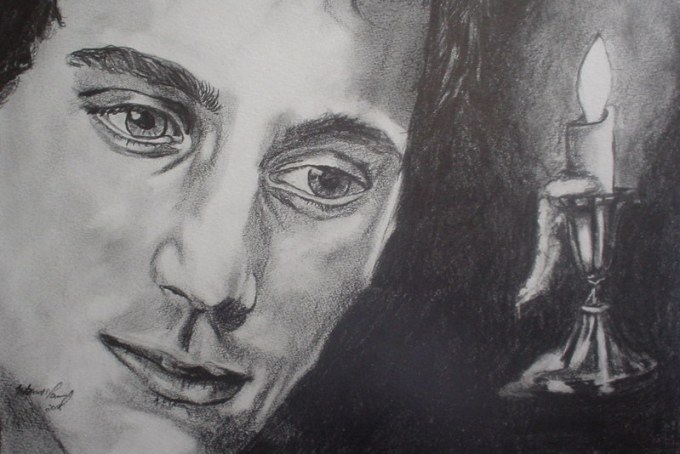
Transparency is not a bad thing, or a good thing; it’s being a 100 % present thing to best determine how and what we communicate unconsciously from body, mind, soul and spirit. Transparency translated from the Latin literally means shining through.  Be resolute in the expressing the uniqueness of your character to scintillate to its full potential. We are lights, and should not be put under a basket but on a hill for all to see.  Let it shine. Light dispels the dark. Illumination is allowing the light of God to shine through the lens of our existence.  A huge responsibility not without it challenges but I believe is the path to enlightenment, survival and joy. We are own agent provocateur to heal our lives and inspire others who struggle in the dark.

Transparency in this context is being all in. What you see is what you get. It is what others see and feel when in your presence; it is what we project through our lens; what we emit and radiate unconsciously. The flip side of transparency is how we receive information; for it is a two way lens. When we are fully present in our projection we automatically become fully present to receive the verbal and non verbal cues that others are projecting. This allows us to autonomically govern the degree of our opacity at any given moment.  You want to honest on a witness stand but not necessarily transparent.

We can change the thoughts of other without uttering a word, we can disarm an antagonist with our demeanor or we can make a child laugh with our eyes.  Honesty is revealing truthful facts, transparency is revealing soul; it’s about being vulnerable and exposing the underbelly of who we are to ourselves first and by degrees to the world.

I struggled in the dark for many years after my son died; I was not transparent; I was not honest.  I formed a credible façade from the cascade of unsolicited advice and pulled down the blackout screen over my injured soul. One side was black and blocked any transmissions from my soul; the other side reflective so people would see what they wanted to see.  It worked, and I was left alone… all too easily. But we are a village and we need each other’s shine to light the path when darkness prevails.

In 2010 I made a bucket list. I wanted to be transparent with my needs and wants with enthusiasm for a full year. I was not being transparent although, I was being selfish and I just got fat.

In 2015 I made another attempt at transparency and created a list that sounds like “bucket” but started with a different consonant. I was not transparent, I was driven; driven to find my bliss, my purpose.  It was life changing but not life affirming and not necessarily transparent.

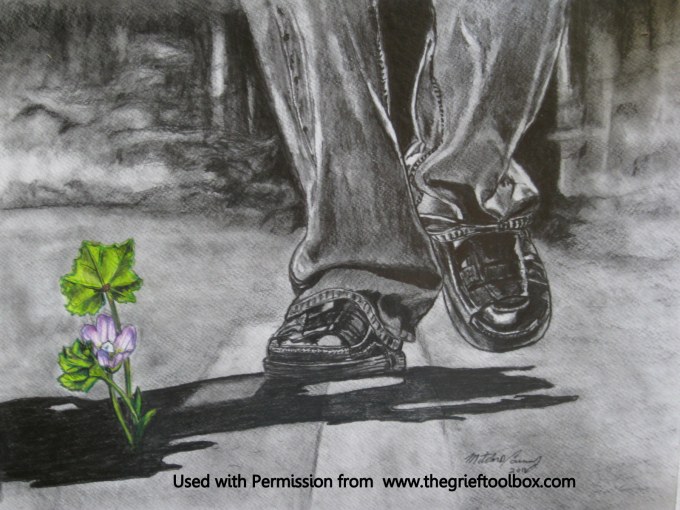
January 1st of 2017 I started my year of transparency; I started a new health regime to be transparent with my body’s needs;learning to listen and respect its voice; I lost a ton of weight and off all meds.  I created a YouTube channel called MrHeartlight and I was transparent with my character on many levels for those in grief.  I was fully transparent with my wife and we bought a condo and listed our farm of 23 years for sale in one week. I was transparent with colleagues and completely changed the way I conduct business and presentations.  Through proactive transparency skills I have found body, mind, soul, and spirit equilibrium.  Equilibrium produces harmony, and harmony virtual luminescence and peace. Transparency allows that light to shine through and it allows other’s light to be received. This the photosynthesis of healing.  Let there be light.

Mitch Carmody  December 2017

“I would rather walk with a friend in the dark than alone in the light “        -Helen Keller

Step out the Dark, Step Into the Light; Proactive Grieving

IMG_4138

Step out of the Dark, Step into the Light, Step into the Sun

Proactive Grief Processing


 In 2017 Face book CEO Sheryl Sandberg released “OPTION B” a book on the NY Times best seller list for 16 weeks. She had heard me speak and inspired by my words included a statement regarding proactive grieving in her book. In 2016 a book was released by Rita Silverman with forward by Katie Couric called “Replacement Children: The Unconscious Script” which also contained a chapter on proactive grieving that I had penned.  The paradigm shift on healing from loss and trauma is in full swing, and our country is embracing it; not putting grief behind you, but right beside you.

I am humbled and excited to be a part of this paradigm shift in grief consciousness with the many workshops, conferences, and grief organizations that I speak for and attend across this country. Most recently I have taken part in several Bereavement Cruises that offer healing in a very unique and powerful way. With the rhythm of the waves something works on body, mind, soul and spirit simultaneously that catalyzes healing by just being present. An extraordinary discovery and something I am anxious to explore some more. My thoughts and explorations into grief started at an early age, only now am I piecing it all together.


image

Oz never gave nothing to the Tin Man that he did not already have”

                                                           – Dewey Bunnel (America)


I was the youngest of seven children growing up in the 50’s. In my quiet thoughts at times I felt that I was a replacement child and not even knowing the term.  I had three older sisters, a twin sister and two older brothers.  One older brother, John died at birth. I never knew him, no photos, or his name ever mentioned; like some dark secret that John had died with the cord wrapped around his neck. Brother David was born a few years later; it was a late delivery and he was born severely mentally challenged with cerebral palsy and was institutionalized until his death in 1977.

I was born in 1955. My mom and dad finally had a viable, healthy boy, with the bonus of another girl, my twin sister. I did not have to fight for attention; I only had to choose who adored me. Mom wanted me as her only son, dad wanted me as his only son, and Grandma now had her only grandson (she never had a son).  I felt bad for my twin sister who was left in the shadow of a celebrity twin and the only boy. We never spoke of it but I felt it up to the day she died in an accident in 1984 at age twenty-eight with her two young sons.

Early on I felt guilty for my twin sister’s lack of parental attention as well as the pressure on me to be the boy in the family and fill some nebulous shoes that were never worn.  John was a mystery and David a prisoner of his own body.  I could not replace them but felt the pressure of Dad wanting a man’s son and mom wanting a momma’s boy. Mom won. Dad was a war hero, football hero, a typical 1950’s male, a truck driver and a cop; in my eyes he had struck out.  He died at forty-nine when I was fifteen years old and never really having had that relationship he wanted so badly. My mom’s first words after Dad died were, “You are the man of the family now.” I secreted away my grief and stood tall; big boys don’t cry.

Fast forward to 1987 when my nine year old son Kelly dies of a brain tumor after a two year battle with the disease, leaving behind two worn out and shell-shocked parents with a surviving sibling Meagan, only six years old.  If it were not for Meagan, my wife and I had discussed doing a “Thelma and Louise” off of a cliff. We did not, so we discussed getting pregnant again.

My wife Barb had a tubal ligation after our daughter was born and we soon found out it was not reversible—she was crushed. We discussed adoption, but soon fell into deep despair and in the apathy of broken dreams, we resigned to the fact we could barely take care of our surviving daughter much less another child in our lives. We accepted defeat on many levels and we functioned at a base level of survival sans joy.

When a child is terminally ill they become the center of the universe and the healthy sibling is always on the bench. When Kelly died I believe Meagan felt it was “her turn” finally to be the center of our universe and found that her parents could not let go and her brother became deified; it’s impossible to compete with a God. She lost her parents and her brother in the deal.

In an odd way, I believe she wanted to be that “replacement child” who was showered with gifts, attention, and travel. Instead, she found herself living with two broken parents who worshipped a dead brother she was soon forgetting; again getting the short straw in life.

When Meagan became pregnant eight years ago, my wife was ecstatic that she could have a boy and she could start all over again loving a little boy and watching him grow up as he should—beyond the age of nine years old.  Meg had a girl and although excited, I know my wife was disappointed it was not a boy.

That year Meg came to a bereaved parent conference to hear me speak and became involved with the sibling program. Now as a mother she said, “Dad, now I get it”; she understood why her parents were screwed up for so long and as a new mother she could not comprehend that kind of pain and forgave me. It was huge for both of us. She grieved as an adult for the loss of her brother she experienced at age six.

Four years ago, out of the blue, I received a call from a psychic with a news flash she had apparently received with her gift and had to let me know. She went on to say that Kelly was coming back into our family as a new grandbaby. Low and behold, my daughter was indeed pregnant (although did not know it at the time).  She eventually gave birth to our second granddaughter who was born on Kelly’s 23rd angelversary date.  They named her Olivia Kelly.

In our minds, my wife and I were already replacing Kelly with this new child coming into our lives. It is probably a good thing she was not a boy as we would have treated him with so many expectations. I even thought about taking Kelly’s old Predator bicycle out of the back shed, cleaning it up and getting some new tires. We are still bereaved parents and we would accept any miracle that would bring our son back into our lives.

We are still, almost thirty years later, processing the death of our son.  We have learned much in that time and we have reached the most blessed realization that dead is not gone.  We do not have to bury our child with their body; we can maintain a new relationship on a non-physical level. You do not have to replace what is not gone.  Both of my granddaughters talk of Uncle Kelly in the present tense as we keep him present in conversation and they see his image often on the cover of my book and on the wall of their own home.  When our granddaughter’s cat died, she drew a picture of Kelly holding her cat on the rainbow bridge.

As my daughter was growing up was she jealous of our continued bond with Kelly? Was she pressured to compete with her dead brother?  Was she scarred for life by our actions or lack of action? Did we treat her as a replacement child for Kelly? By her response here to that question, I think not.”

From Meagan Carmody:

“At age six and a half on the night Kelly died I remember feeling confused and sad, not only for myself but for seeing the pain on my parents’ face. I remember locking myself in the bathroom and sitting in the bathtub where I started to cry. I had this overwhelming feeling that I had to be strong and did not want to appear sad as there was enough sadness surrounding me.

Those first few months after Kelly died I can remember being surrounded by a blanket of love from family and friends; the same friends who loved me during those long years of Kelly’s illness. I always felt loved.

I didn’t want my parents to be sad anymore, but there were always dark clouds appearing and hovering over my family since the cancer came into our lives. Now that the cancer was gone maybe the clouds could finally start to break away and my parents could once again feel the sun on their face.

We never forgot about Kelly; we always did something special on the anniversary day of his death. We would do something as a family together. Sometimes we would make “I miss you” cards and throw them in the fireplace where the ashes would ascend into the sky with hopes that our love would reach him. Over the years my dad made a video of Kelly and my parents would watch and share with others. We had a trunk of all of his things; we would make a yearly ritual to watch this video and look through his trunk of things.  As my dad likes to say, we would swim in the grief. I think as a child that this was a way for me to keep his memory alive and felt that it was okay to cry for him; this was a very healing time for me.

The hardest part of my journey, I believe, was to watch my brother slowly dying, and being a young child, to not totally grasp what was happening to him, other than that he was really sick. In a weird way I felt a huge sense of relief after he died, like the storm was over and he did not have to suffer anymore. I felt like Dorothy in the Wizard of Oz when the house abruptly landed and all was quiet… and then she opened the door slowly to a new colorful world and heard soft singing in the background, “Step out of the dark, step into the light, step into the sun” and my new life began from pieces of the old. I will never forget about my brother and the memories we had together. Both of my children know of their Uncle Kelly. We have a huge picture of him in our house hanging on the wall. Kelly lives on and so do we. I have no regrets.”

 From Mitch Carmody:

“There is life after death on both sides of the equation after a significant loss; not only can we survive, we can thrive.  We need not replace our loved one who died in our family, but we can embrace their spirit by living with the loss as a part of our daily life. This is what I call “Proactive Grieving ®” a philosophy for surviving loss. We can and will find joy again—it is our birthright.”


The Sound of Silence…

The Sound of Silence

The first line from the song The Sound of Silence by Simon and Garfunkel is “Hello darkness my old friend I have come to talk with you again”.  Recently a dear friend introduced me to a new rendition of this song by a heavy metal band called “Disturbed”, not my genre or his but this somewhat lugubrious version is hauntingly beautiful. Sad and morose in nature, yet inspiring and captivating; you feel the roiling angst of grief expressed with dignity. It touched my heart and inspired me to combine the song with my drawings of the 20 Faces of Grief.  link to song:    https://www.youtube.com/watch?v=UCtkkmjwd3U 

 Those who are bereaved and have experienced the death of a loved one understand what the line ” Hello darkness my old friend, I have come to talk with you again” truly means. We know who that old friend is   Let me introduce you to my old time friend. His name is Grief. He is not my enemy; he is my closest friend and ally. Grief is that old friend that listens to my deepest pains, fears, and sorrows; he is always available day or night.  That friend who came immediately to my side together with his friend Shock when my son died.  They both held me up with invisible arms to do the impossible and bury my child.

Grief is an old friend; I invited him to stay with me when my son died. When the funeral was over and my whopping three days of bereavement leave completed I went back to work. It was time to pull up my boot straps, get busy in my work and let time heal.  I told my friend Grief that although I was grateful for his support to get me through the funeral, there is no way he could come to work with me. It would be embarrassing; people would wonder why he was with me all the time and I would have to try and explain.  He agreed and for the most part Grief stayed home but his friend Shock insisted he come with me to work at least for awhile. I was glad he did, I could have not done it without him. Funny thing is no one really noticed him.

Being a good friend Grief honored my request and did not come to work with me those early weeks, but he did not leave altogether. I said he could stay in my son’s old room as long as he needed too.  Shock stayed in my room in the early days but grief stayed to his room for the most part. On many occasion although I would find him waiting for me, sitting in the car when I got off work. Sometimes he would even surprise me at work and say “let’s take the day off” and we would. He would seem to know the right time to pounce on me at work and we would go for a walk together, just he and I.

Sometime in that second year, Shock stopped coming with me to work and he just up and left one day. As a result my friend Grief started popping into the office more than ever before. He showed up at dinners, events, most every movie I went to,  and  he would even surprise me in the shower some mornings and I would lose it completely. In those early years most of our time together was spent kicking back on the couch and having a few beers together and drift off to the sound of silence. After while he never seemed to leave me alone, at home, at work , at night, I could not get away from him and he was a slob, a slouch and a grouch on a couch.

My friend became my nemesis, my antagonist, he shadowed my day and owned my night and I wanted him to leave, but he stood fast. I began to resent him taking over and controlling my life and leaving it in such a mess. I no longer wanted him as my friend but I had no strength to throw him out so I gave in gave up my control and rested in my own vulnerability to his care.  I gave in to my captor the same as hostage may do with their captor. It is not unlike The Stockholm Syndrome where a victim starts to believe the same values as the aggressor, they soon cease to see their captor as a threat and can rest.   So we rest.

Eventually at some indeterminate time Grief started to take a few vacations, longer and longer ones it seemed; sometimes I would not see him for a month. As much as I liked having my own life back, I missed him.  I experienced the very odd feeling of cognitive dissonance. I was holding two opposing wishes that muddled my brain like a difficult conundrum. I had to accept this is my life now. I am muddled. I am grieving. I am crazy. I am lost. My life is a mess and I need my friend.

 I knew I could call him if I needed too, but I felt I had already taken advantage of so much of his time that I did not want to bother him with minor complaints. Oddly he would seem to know the vision that was planted in my brain…and he would show up unannounced when I needed him most and stay as long as I needed him.

Sometimes he would stay for only an hour or two, at times a day or two but seldom longer than that. We did not drink beer on the couch together anymore or fall asleep with the TV on.  He seems to have grown up a lot; he stands a quite a bit taller now, and has lost a whole bunch of weight and he brought much less baggage than before. He is a whole lot less intrusive and domineering now; he mostly just listens with that understanding smile.

Today almost 30 years later he still visits on occasion; he always stops by on his own birthday, most holidays, some weddings but all funerals. Grief is a good friend, he saved my life. In learning to live with him…I have learned to live without him. We do stay in touch however.

If you are lost and cannot seem to find your friend, please lean on mine until you do find yours, and keep listening to the whispers contained in the sound of silence, it whispers hope.

Peace love n light

Mitch Carmody Aug/2016