Whats left in Pandora’s Box ?

What’s left in Pandora’s Box?

From ancient Greek mythology you may have heard of the legend of Pandora’s Box. Zeus with help from the other Gods created a beautiful woman as his daughter whose dowry was contained in magical box that she was instructed never to open. Pandora was the first woman who was created and she was to marry Prometheus the Titan who had created man.

Prometheus was the champion for mankind and he had stolen fire from Zeus to give to man use so that he could grow and prosper. Zeus enraged at the theft punished Prometheus by presenting his daughter to his brother Epimetheus to marry.

One night Pandora woke Epimetheus up and told him she had opened the box and all this pestilence, evils, and disease flew out before she could close the lid. Epimetheus went to the box and opened it to see for himself. He found that the box was not quite empty. There was one thing left inside…hope.

On our grief journey following the death of a loved one we find ourselves lost in a sea of despair. The evils of Pandora’s Box were unleashed into our lives and the lid slammed shut without any hope.

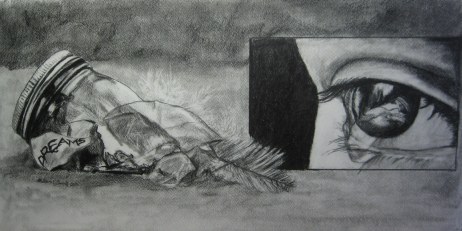
When our dreams are shattered hope seems elusive; even to survive it seems we are dishonoring our loved one. How do we find hope again?

It seems we have to go back to Pandora’s Box and open it once again to look for hope. We walk back into the dragons den of our fears; we face the dragon of death that took our loved one from us. We look at the pain and horror that has overtaken our life and identify the fears that keep us from finding hope. Our fear of forgetting, our fear of healing, our fear of not grieving, our fear of a meaningless future, our fear of laughing again, our fear of our own apathy, all fears that keep us in our cocoon of grief and safe from the reality of a harsh world.

Finding hope is risky business, finding hope takes work, finding hope takes commitment, finding hope takes faith. Hope without faith is mere optimism, faith is the fire on the candle of hope that sheds light in the darkness of despair. With hope kindled by faith and intention we can remove our fears one at a time by facing them and incorporating them into our daily experience.

Fear of forgetting is addressed by sharing our story with all that will listen and even to those that do not, we keep our loved ones name in the present tense, we remove the word had, and insert have.  I have two children; one who lives in Red Wing MN, the other one abides in places only dreamed of.

We have the fear of healing because we are afraid if we lose the pain we are somehow getting over it; so we pick the scab from our wound to keep it fresh; give me the pain if that is all I have left. Fear of healing can be assuaged by creating a legacy in the honor of our loved one. To create a legacy we need our health, our strength and our spirit.

Our fear of not grieving enough, not mourning correctly or not exhibiting affectations of mourning can be challenged by immersion into the grief. Watch home  movies, look at photo albums, watch Hallmark and other tear-jerker movies, tell life stories and the death story; catalyze the tears in any way you can, give yourself the opportunity and permission to actively lament, cry and even rage. Our fear of a meaningless future can be removed by planting seeds. Some seeds sprout immediately, some lay dormant for years; some seeds need the heat of a forest fire to bring them to life; now scorched by the fires of your loss, long dormant seeds may emerge. Talents laying deep within may show themselves in the continual struggle to survive. We just have to watch for them and nurture them; they are our future.

Our fear of laughing again can be addressed by simply watching a funny movie, being around children, be with friends who make you laugh, wear a red clown nose to work, allow people to laugh with you, it’s contagious and you will laugh in the process. Take a risk to be silly. Laughter is a free and natural anti-depressant with no side effects.

Our fear of our own apathy can be conquered by serving someone else’s needs above your own. In any way, no matter how small the act is, it can neutralize apathy immediately.  Apathy is probable the most deleterious state of being to our emotional, spiritual and physical health and the biggest barrier in find hope. Give and you shall receive; and you shall receive hope.

The world, our life and our grief journey are all an allegory to Pandora’s Box.  Most people who remember the legend only remember the evils that were let out of the box to plague mankind.  We tend to forget the most important teaching is what was left in the box for us to find on our own. In opening the box once again we return to self, no longer looking for what we have lost but going back and discovering what we have left. It all starts with finding hope.


“Let your hopes, not your hurts, shape your future”

-Robert H. Schuller


The Chronology of the Bereaved Parent, living with loss for a lifetime

                                   IMG_4682

used with permission http://www.thegrieftoolbox.com

If you want to go the extremes of grief to try to understand the complexities of the bereavement process one should study the bereaved parent.  No other loss is more egregious, no other loss more onerous than the death and physical loss of a child.  No other loss leaves your heart as deeply mortally wounded for life. No other loss is more difficult to accept.  Even among bereaved parents there is a plethora of differences that sets individual grief journeys apart and how they process their loss.  There is although two commonalities we all share. 1.) We are forced to accept the unacceptable: the physical loss of our child forever.  2.).Our individual grief is the hardest grief to bear.

In the 1970’s Elizabeth Kubler Ross pioneered death and dying research.  Her five stages of grief have been accepted and used worldwide since that time; for the most part without question. Although I think her work is commendable and the best resource we had then and for many subsequent years. It has been in my experience with the terminally bereaved parent that some of her theories do adequately represent the true reality of the bereavement process following the death of a child

The five stages of grief were taken directly from the studies of Dr Ross with the terminally ill and dying patient.  When a person is first told they are dying they are in denial, NOT ME!!!, secondly they progress to anger, I am Mad at God for doing this to me and fight to stay alive, thirdly they start to bargain with God to stay here and pray for a cure, fourth, they become depressed at how rotten and unfair life is, and five is acceptance they are dying, and make peace with that reality.  In this context the use of the world ‘stage is used correctly’ as it describes a series of linear progressive events.  Grief is more like ascending a stairs. See my WordPress blog “Climbing the S.T.A.I.R.S. of grief, a new modality in grief processing.”

In processing the loss of a loved one there is no linear progression of events, no stage of grief that fits life as we know it following the loss of a close family member.  If there are stages, there is only two: shock and acceptance. Everything else falls in between.  Both denial and bargaining are insults to our intelligence, of course we know our child is dead, we buried them.  We cannot strike any bargain that can change that fact.  Depression and anger are very real emotions that we will experience but they are not stages, but a condition of our new normal which may be an on and off again challenge of the bereavement process that will affect us the rest of our life.

Bereaved parents trying to fit themselves into the accepted stages of grief find themselves frustrated if they have not gone ‘through’ the stages.  Very vulnerable the new bereaved parent, still in somewhat in shock find themselves processing their loss as the mores of society dictates.  Three days of bereavement leave, and then it’s back to work and get on with your life. In a few months you will be over it and quietly blend back into the workplace as hoped for and expected by most.  At first you will be greeted with embarrassed looks by co-workers who almost hurt themselves making an unanticipated hallway dodges or an abrupt u-turn, ad-hoc bulletin board readers, mutterers hiding behind magazines, skillful eye contact avoidance and spontaneous rest room needs all ruses to avoid the uncomfortable contact with the bereaved parent…

People practice avoidance to avoid bringing up the subject of your loss which they feel will be sure to inflict more pain.  They also have their own concerns that they will be put into a position to have to say something profound and healing to say when they know there is nothing that can be said to take away your pain.  We ourselves play the artful dodger role when we do not want “to go there ‘at any given time. Sometimes the actions we see in others are a reflection of our own projection.

I remember one time seeing a person coming towards me down the hallway at work one morning a few months after my son had died. He rounded a corner whistling and glancing cheerfully at the headlines of his morning paper, unaware of his overfull coffee mug leaving a trail behind him.  Then I see that he catches site of me in his peripheral vision and he scrunches into the pages of his paper. He became more engrossed in the paper as we neared each other in the narrow corridor. I was feeling down with a transitional edginess  and did not want to hear any morning weather reports or exchange cheerful dribble, so I dodged to the right just as we neared each other, he dodged the same direction, we both reversed several times and at the same moment we both said “ care to dance?”

We both laughed loudly in a very natural way and automatically hugged one another.  He whispered in my ear with the compassion of Mom tending her sick child “how are you doing man?”  I pulled back and looked him straight in the eye and responding that up to this moment I was having a very bad day “thanks for the dance”.  We both laughed as we walked away my heart lighter, his heart brighter.  Sometimes we avoid contact with others just as they seemingly do with us.  Just under the surface our racing emotions are left unseen and unexpressed. In a spontaneous or forced contact situation with another our emotions can be released like the welcome bursting of thick skinned pimple and although it hurts briefly we sigh with relief that the dam has burst.

The first year back to work is a difficult challenge for the bereaved parent, but remember you are still an infant in your new normal.  We get lost in a forever wandering mind of our own internal dialogues.  We have no attention span for the language of the real world and depend on Post it notes to remember everything, we trip more, and spill things more, lose things, and get lost on a simple errand. We develop techniques to get things done, but the color is gone from our life.  We are changed for ever. The loss of a child is terminal bereavement.  We start all over again and try to figure this our ‘new normal’ (new abnormal).  It is a new beginning in all sense of the word and our clocks are reset.  We construct new concepts, new ways of looking at life…not from the passage of time but from an amalgamation of events and experiences. In the depths of early grief time seems to stand still, so as with an infant time has no meaning, all that matters is that we be comforted. When we are infants in our grief journey time stands still and all we want is to be comforted. As an infant grows to childhood time will appear to accelerate just as it will as we move through the years following our loss.

In essence I believe we are born again into a new life that starts the moment our child dies and ends the day we die. We start marking time just as a new born baby does, day by day, year by year in a slow progression of discovery of the person left behind. A slow metamorphosis of the psyche, like the Phoenix we rise from the ashes of our despair and become our new found destiny as surely as the baby keeps trying to walk.  We need to go through that progression of life developments and stages of growth that a child goes through in becoming an adult. We need to grieve naturally, not stages of grief but stages of life development that takes years not months to progress through.

In support of this theory I offer parallels to similar behaviors as drawn by the famous behaviorist and psychiatrist Erik Erickson in 1956 and his 8 stages of social –emotional development of a child from infant to adult.  These stages of development are accepted world wide and using in most institutions of higher learning.  According to Erickson, the socialization process consists of eight phases- the eight stages of man.  Each stage is regarded by Erikson as a “psychosocial crisis” which arises and demands resolution before the next stage can be satisfactorily negotiated.  Stages that build on each other, each previous stage supporting the next and  so on in a structural sense that demands each stage be achieved before moving on to the next.  The stages with Erikson’s words that are used in this article are in bold print. I merely compare them to the grieving process, and postulate their relevance in understanding the long term grief process that a bereaved parent is suffered to endure. I believe we are vulnerable and needy as a new born child and we grow into our new normal just as a child takes his first steps.

The world stops spinning, time stops your brain is a code blue and reality as you know it fades from conscious thought and you are propelled into a world of disbelief.  Taken from a world that you knew and understood, a world of warmth and security and you find yourself head first into a cold painful world of the unknown.  It’s hard to see, you are shaking, insecure and frightened of what’s a head. Tears flow from your eyes, you feel cold and lost and just want someone to hold you and tell you it’s just a dream.  Am I describing a baby just being born into this world or a parent just hearing the news of or witnessing the death of their child?   It could be both, both describe being thrust into the unknown and faced with the continuing challenges of survival.

Life without our child; our new normal; Just as a newborn baby needs to adjust to a new environment, so do we.  As an infant does that first year we shall cry a lot, sometimes way into the night,  sleep for a few hours, only to wake up frightened, cry and then sleep some more. You will find people taking care of your simplest needs for you and without compunction, you offer no resistance. As if in a daze you allow them into your close personal space but it feels good to be cared for. You will have accidents, you will be unsure of yourself, you will be scared to venture out, be hesitant with strangers, and testy when you’re tired, and you’re always tired.  You will want to explain what hurts and find you have no words that can express your thoughts.  Food will be tasteless and you will eat in a perfunctory fashion, yet coupled with an unabated thirst that cannot be slaked; a bone itch we cannot scratch. So we find pacifiers to slake the unquenchable indefinable thirst that gnaws at are being. Again does this describe an infant or a bereaved parent functioning at the base primal level of 1st year survival?

The first year of life as outlined in Erikson’s stage of development:

 Stage One.  Learning Basic Trust Vs Basic Mistrust (hope).

Chronologically this is the period of infancy though the first one or two years of life. The child well handled nurtured and loved, develops trust and security and a basic optimism .Badly handled, he becomes insecure and mistrustful.

The world, God, Kismet or fate has stolen our child from our arms, caused them pain and continues to assault us with more pain and deprivation. How do we ever trust again?  Baby steps; we learn all over again. We will try to stand and fall, we will try to walk and stumble, we shall try to explain and cry in frustration with no words that anyone can understand. We are dependent on others for our own survival, we reach out for anyone to pick us up and pat us on the back make it all right. We want to be comforted on our own terms until we can understand this new world we are forced to accept.

If we are well handled and cared for, we shall develop optimism, a sense of hope and we grieve naturally. If the grieving is delayed, so will the first step towards optimism and the whole bereavement process chronologically delayed and sometimes without help can be stuck forever, never finding hope, never building on that next stage of development that we must go also go through.  That is just the first year following the loss of a child, and at the risk of being glib we then head into the terrible twos, our second year of grieving that is more often worse than the first.

Every morning when you open your eyes your get a mini-jolt that their death was not a dream, a year ago on this day they were dead (but we still cannot say that word).  This morning is real and it has another full day of painful memories in store to rip your heart apart. The world thinks you are on the mend, and you are just beginning to understand it’s going to take a long time, a very long time.  Every day after the first anniversary of their death now contains memories of their death and the ensuing life change that follows. It is like starting all over again without the numbness and for the most part the world has now expected that you should be over it.

The terrible twos, the second year of healing, when anger, frustration, apathy, anxiety and depression play tag team for control.  The loss begins to become very real, and separation anxiety kicks into high gear.  Extreme concentration becomes necessary for to accomplish almost any task, and every task seems to deplete you physically.  You will have accidents; lose things, trip, stumble and fall.

You want to feel better, be able to talk normal, care about things again, but yet it’s hard to leave behind that initial, albeit painful but protective cocoon of grief that has protected you for so long.  As a baby longs for independence, yet it longs for the security and comfort of bottle and crib we struggle with mixed emotions on our second year of healing.

We can fly into a rage at a moments notice, cry uncontrollably out of the blue, so NO to everything, don’t eat what is on our plate, we want our nap, we scream out “It’s not fair”, we pout, we are difficult to be around, we sometimes runaround like a chicken with our heads cut off and we fall into a exhausted pile and sleep.  Begging o be left alone one minute and then begging for hugs the next.  Are these symptoms of our second year and third year of our bereavement process? Or a two year old just beginning to assert his/her autonomy?

The second stage of life development as listed by Erikson is from 1 to 4 years old.

Stage Two. Learning Autonomy versus Shame (Will)

The second psychosocial crisis of a child from age 18 months to 4 years old is finding autonomy.  Autonomy is not, however, entirely synonymous with self assuredness, personal initiative and independence, but for children in the early part of this stage includes the stormy self-will, tantrums, stubbornness and negativism.  The well parented child emerges from this stage sure of himself, elated with his newfound control and proud of it and not ashamed and ‘NO’ rings loudly through the house.

 We as bereaved parents entering our 5th of year of experiencing life without our child will usually feel we have hit a bench mark, a milestone in recovery from our devastating loss, yet may still feel without purpose.  If active steps have been made to integrate our loss into our new life, by this time we are starting to broaden our experiences, reaching out to the world and see how we fit into it.   We may go back to school, change careers, start a foundation, lead a recovery group, get involved, and dare I say make plans for the future. Imagining we can have a life again.

No longer a toddler we are discovering the nature of our selves (our new normal) and gravitate toward experiences that can bring interaction with the world. To hunger for knowledge, love, and pleasure, to experience growth and may be even fun again.  To become involved again in groups, meetings, as a leader and or contributing follower all show a desire to invest in life again; not working on ways to heal from your pain you may become stuck in anger or apathy and not want to move beyond the terrible twos, staying dependant on others for your needs and avoiding interaction with the world that has hurt you so bad, taking your ball and staying home.

The third stage of life development as listed by Erikson is from years 5 to 7 years old.

3Learning Initiative Vs Guilt (purpose)

This is the  third psychosocial crisis  and occurs during what what is called “play age” or the later preschool years to formal entry into school.  During this period the healthy developing child learns (1) to imagine, to broaden his skills through active play of all sorts, including fantasy. (2) to cooperate with others (3) to leas as well as to follow. Or immobilized by guilty, he is: (1) fearful (2) hangs on the fringes of groups (3) continues to depend unduly on adults and ( 4) is restricted both in the development of play skills and in imagination. 

 Seven to twelve years following the loss of your child you have more than likely fully integrated back into the work place and the world in general. Your loss to most people is not known or forgotten about and is ancient history.  At this point in our journey we may be even playing catch up with the world that has moved on so quickly while we were gone from it.  At this juncture of our bereavement process we are honing the new skills we have learned in our survival of the horrific loss we have to bear. Our social skills improving, once again we hunger for more of what life has to give, experience more love, more joy, to see more of the world.  We are willing to take on tasks, become a team play once again and work hard to accomplish goals.

 If we have in our journey have still not gone through an earlier developmental stage of  our new normal we may still be in a negative, guilt based position of being defeated and have no thoughts to the future. Most thoughts locked in the past, anger still has control they and used to living life feeling inferior with no hope or redemption.  Life sucks; I have no friends who understand. I am lonely. I am bitter. I am a victim. We have choice to become a survivor or a collateral victim.

  1. Industry Vs Inferiority (Competence)

The fourth psychosocial crisis is handled for better or worse during what is calls the “school age” presumably up to and including junior high school.   Here the child leans to master the more formal skills of life: (1) relating with peers according to rules (2) progressing from  free play to play that may be elaborately structured by rules and may demand  formal teamwork .(3) mastering social studies, reading and math.  Homework is a necessity and the need for self-discipline increases yearly. The child who because of his successive and successful resolutions to earlier psychosocial crisis is trusting, autonomous, and full of initiative will learn easily enough to be industrious.  However the mistrusting child will doubt the future. The shame and guilt filled child will experience defeat and inferiority.

From twelve years to 18 years in your bereavement process and if you have experienced every previous developmental stage of life progressions you may finally have come to terms with who you are now; the transmogrification of your post child- loss identity almost complete. You have now fully integrated into your new normal and recognize how the loss of your child has changed your life. You accept that change and build on it, even looking for growth opportunities that are presented to you in your new life and may find you have the strength to take on causes and make positive changes.  At the same time you will still have feelings of self-doubt and despair and may not want to move forward, frightened you may forget and long for the security of the old days despite their extreme pain.

  1. Learning Identity Vs Identity, Diffusion (fidelity)

During the fifth psychosocial crisis ages 13 to 20 the child, now an adolescent, learns how to answer satisfactorily and happily the question of “Who am I?”  But even the best adjusted of adolescents will experience some formal identity diffusion: most boys and probably most girls experiment with minor delinquency; rebellion flourishes; self doubt floods the youngster’s thoughts.

By this time in the process of your bereavement you may have allowed you self to love again. You may have lost many friends, some even being the closest of friends or relatives; relationships lost through attrition or by choice in the battle to survive your loss and there may be collateral damage. You now value more than ever the relationships that survived and the new ones that were created.

  1. Learning intimacy Vs Isolation (Love)

The successful young adult, for the first time can experience true intimacy, the sort of intimacy hat makes possible good marriage or a genuine and enduring friendship.

At this point in our “new normal” we may be working productively and creatively in most aspects of our life.  At this point in the stage of development in our new normal we find that it merges with the normal stages of life development that everyone is faced with, regardless of the loss of a child in their life. You may have more deep loving relationships in your life than ever before.

  1. Learning Generativity Vs Self-Absorption (Care)

In Adulthood, the psychosocial crisis demands generativity, both in the sense of marriage and parenthood, and in the sense of working creatively and productively. 

On our grief journey if we have built upon our success and challenges we have faced through the years we have become productive and we have successfully turned our loss into legacy.

  1. Integrity Vs Despair (Wisdom)

If the other seven psychosocial crisis have been successfully resolved, the mature adult develop the peak of adjustment; integrity.  He trusts, he is independent and dares the new. He works hard, has found a well defined role in life, and has developed a self-concept with which he is happy.  He can be intimate without strain, guilt, regret, or lack of realism; and he is proud of what he creates – his children, his work, or his hobbies.   If one of more of the earlier of crisis has not been resolved, he may view himself and his life with disgust and despair.

At this point on the journey we may have reached a point in our life where we have found joy again. Living in the present moment with a attitude of gratitude, honoring our loved ones/ones  who have died with how we live our lives. If we are happy we shine by example. At this point we are wise and seasoned grievers.

In summation I would like to say that I feel every one of us goes through, or does not go through all these stages of human development in the process of experiencing life on this planet.  If we experience the first six stages of development fully and sequentially, the last two stages will only enhance your life and the lives of those around you and you will find yourself making a difference in this world.

When you experience the loss of a child your life is changed forever and in essence you start all over again in the developmental stages of life.  Just as in your own birth experience and its developmental stages of life that we complete or do not complete is so unique, so it is with our bereavement experience for the loss of a child.  Everyone’s journey is so different.  What is the same is the life time journey to find purpose in our life. The loss of a child can cripple you forever or empower you to change the world. We do have choices.

Blessings on your journey

Mitch
Planes Trains and Automobiles to Planet Grief and Back
imagePlanes Trains and Automobiles to Planet Grief and Back

It has been 26 years since our son Kelly died, and what a ride it has been. He had just turned nine in 1987 and was actively dying of cancer with only a few short weeks to experience his life. In those last 8 months of his life, we flew to Disney world, Disney land, Denver, North Carolina, Hawaii, Mexico; we took the train to Chicago and a taxi to “Ripley’s Believe or Not Museum”. We drove to see Paul Bunyan, the Jolly Green Giant and the giant ball of twine. We cashed in our savings and did what Kelly wanted to do; we were proactively living and learning to proactively die at the same time and seemingly for the most part we did it in planes, trains, and automobiles.

Then the movie came out on the big screen and Kelly absolutely loved John Candy movies. Although very weak and frail, the day before he died we took him to see “Planes, Trains and Automobiles”. He laughed until it hurt, and despite the small doses of morphine -it did hurt; that was the last time I heard him laugh or smile.

Kelly’s sister Meagan was only six years old when she saw this movie and when her brother died. Today she is 33 years old and the mother of two girls ages four and seven. She is the same age I was when my child died and it’s impossible for her to conceive of this happening to her, yet she has witnessed it in us. We are bereaved parents and will always be bereaved parents as she will always be a bereaved sibling. She wanted to come with us to participate in the conference for the first time…and for us all to take the train to Chicago; the last time she was on this train was with her brother.

We made plans early, purchased train tickets to Chicago on the Empire Builder and we had good friends in Chicago who would drive us around when we got there. We would then catch a plane back on Sunday. It was our own Planes, Trains and Automobiles adventure, which it turned out to be. The evening before we were to depart we drove to our daughter’s house in Red Wing Minnesota. She lives only blocks from the small train depot where we would catch it in the morning. Later that evening checking my email I saw one from Amtrak stating that the train had been canceled and that they had made arrangements with their bussing service to provide us with an 8 hour bus ride to Chicago. We all screamed no way! There is no Bus in the title of the movie and busses make me car sick. We asked for a refund and I bought the last three flights on American Airlines to Chicago. I know Kelly is laughing his butt off, we should have known, that’s what the movie was about on the surface -a traveling fiasco. It was a hilarious movie but we also see someone (John Candy) who is grieving deeply for his loss but keeping it a dark secret and is the really the most important tenet of the movie.

In his role Steve Martin clearly had no idea about the man’s loss; he knows only that he is stuck with a very odd fellow who irritates him to no end. He tolerates him as many do with us in our grief, and we wear masks or practice avoidance to cover up our aching heart, becoming clever at faking it until we make it. The movie clearly shows how sometimes we as the bereaved relate to the world with unique survival strategies and the fortunate others seemingly have no clue to our inner pain. At the very end of the movie Steve Martin’s character starts reflecting in an almost whimsical way; not out of anger or irritation but with honest love and compassion; then and only then does he see the clues of the grief beneath the surface.

We all have those same mirror neurons that fire in our consciousness that makes compassion a physical reality and empathy a healing tool. It is the love that neutralizes the defense neurons and changes the neuro-pathways and our system is flooded with the hormone oxytocin. This is when our heart takes control and we feel that lump in our throat, our eyes mist up and our mind takes the back seat; we get it. When that happened to Steve Martin at the end of the movie on the city train in Chicago is what most would call an epiphany; a confirmed hormonal response that drives the need to do the right thing without regard to self (hero); changing both their lives in an instant when he responded to the revelation.

In many ways this is what happens at The National Conference of The Compassionate Friends it brings out the hero in us. We become heroes when we provide light in the darkness; we become heroes when we get it; we become heroes when we validate; we become heroes when we listen; we become heroes when we hold the elevator, we become heroes when we speak their loved ones name; so many opportunities to be a hero at the conference. When we save someone else we save ourselves, its hormonal we cannot help it.

So many come to the conference scared, apprehensive, even begrudgingly but the love and authenticity of so many attendees is almost overwhelming and it can be felt physically in many ways; it is palpable and very real. It can enervate you, as well as wipe you out. One must realize that with the group energy level of so many people and the extremes of hormonal and emotional responses it can be chaotic, unpredictable and even painful. Emotions will be all over the map, but we find unification and validation that we are not alone; we are not crazy, and we are not over it. We are doing the best we can to discover how to live with our loss and still have a meaningful life. Coming to a Compassionate Friends National conference can help us do that.


I want to conclude with an article below that I had penned following The Compassionate Friends National Conference held in Costa Mesa California in 2012.

                                            Traveling to Planet Grief and Back

I am continually amazed at the choreography of the dance that I experience at a TCF national conference and the huge impact is has on my body, mind and spirit when I walk off the dance floor and return home. From spending 3 or 4 days on “planet grief” we return home to the mundane realities of the real world and try to blend in with its preoccupied inhabitants who for the most part know nothing of our secret planet. They don’t wear buttons of a dead child pinned to their clothing; they don’t wear name tags around their neck identifying their loss, and for most part don’t wear butterfly clothing or shirts with a broken red heart.

When I return to work I get surprised looks from people who are caught off guard when I hug them good morning without thinking. I feel a deep separation anxiety for my fellow travelers to planet grief with its honest hugs, cathartic kisses, and deep seated dialogues. The heart I wore on my sleeve now feels vulnerable and exposed to the harsh elements of the daily routine and the machine of the workaday world. I am jonesing for my friends, my family of wounded survivors who succor my soul and I theirs in our dance of the broken hearted. In a word I feel “drifty” and lost for a few days; like getting your land legs back slowly after a week at sea I feel unsteady and unbalanced and I weep easily. I miss my family from planet grief and feel the impact of its loss for another year.

Today I am decompressing, degriefing so to speak, remembering and cherishing the magic moments of the weekend and thanking God for the privilege to be there and serve the bereaved with every quark of my being. I help to facilitate healing in the most sacred of places, the human heart and sou. I am always humbled and healed myself by the experience. Cost Mesa California with its oceans of love and mountains of memories was an incredible experience and I had a lot of quality time with my family of the heart. I met many newly bereaved and made new friendships wish I will cherish as much as the old.

We all come to planet grief from many different worlds. Worlds of all kinds; a plethora of differences in race, age, religion, occupation, economic class, intellect and political views, yet we congregate as one family and find a common ground in compassion; finding common ground in love. It is in helping to heal that we are healed ourselves, like one beggar sharing his bread with another beggar both are sustained for another day.

On the walk a few years ago held in Washington D.C. it was revealed to us that TCF had to register our Sunday TCF walk as a protest if we were to walk as a group on the streets of our nation’s capital. First I was surprised and then I thought about it…and you know that’s quite alright -we are protestors. We have our signs, our banners, our bibs, our T-shirts, our name tags and buttons. We all arrived from a network of paths and losses as varied as the stars and together on common ground we protest society’s ignorance of our forever journey and the injustice to our hearts.

Together we are changing the world views of grief and loss. We are educating the fortunate others of our journey and how we survive. We are intentional survivors who are working on our grief proactively, living our loss, not letting go, not get over, not becoming bitter, but becoming better and turning loss to legacy and honoring of loved one.

God bless you all and until we meet again…like Brigadoon “planet grief” appears for a few days in the summer and for a short time we find the camaraderie of hope, hugs and heart to sustain us for another year.

Peace, love and light
Mitch Carmody

Can a Bereaved Dad Smile on Father’s Day?

Can a Bereaved Dad Smile on Father’s Day?

Real Men Grieve
Real Men Grieve  Illustration by Mitch Carmody

The dogs were barking strangely one early morning in July of 1970; I was 15 years old. I knew someone had probably driven up our driveway and were taking their time to come to the door which was driving the dogs crazy. I was up early to get ready to bring my dog to the County fair as a 4-H project and was eager for the day.  I went to the window and peered out to see who could be there this early in the morning. I then spy my Mom walking up with two neighbors close by her side, arms around her, covering her in an obvious shawl of compassion and they were whispering. The dogs’ barking was a harbinger of despair. My dad had died

A few days prior to this my dad had gone in to hospital for a relatively new operation for clogged arteries to the heart and although in this century is now done routinely it was then a very risky operation.  My father had complications following surgery and later died.  Our neighbors brought my mother home to support her in breaking the news to myself and my sisters. My mother reached out to me and embracing each shoulder with her shaking hands she said: “you are the man of the family now son, you need to take care of yours sisters, and the farm…your father has died.”

I hugged her without a tear, without fear and just said…Okay… I love you Mom.  I never really did grieve or publicly lament my fathers passing.  I was the kid whose old man kicked the bucket over summer break. I was embarrassed by the quiet looks of consternation and thusly became the clown, to laugh it off preemptively and avoid the glares. I put away the grief, the pain, and did not lament, or mourn my loss.   It seemed almost too easy to pack away.  My mother soon remarried, then feeling somewhat abandoned, compounded with the strong feelings to stretch my own wings, I moved away from home at 18 years old.

Now years pass by, I get married and have a child, our firstborn, our only son. Soon we were blessed with the birth of his darling sister, life seemed again be joyful and the fulfillment of a dream.  Soon the dark clouds returned with death of my only son, nothing could have ever prepared me for the depth of pain that one experiences in losing a child. Nothing!  The world stopped and everything I ever knew had now changed forever. I was lost in hopeless pain for many years.  Father’s Day mocked my existence, for fate had slapped me in the face. Both my past and my future in fatal swoops were whisked away and I was left here in the present alone in so much pain. Why me?

I lost my father, then my son, it felt so violated, so cheated, earmarked by God for misfortune, It felt like I was playing a role in some Thomas Hardy tragedy where I played the main character whose life was built on misfortune.  I soon cracked under its weight, it broke my spirit, and I felt hapless, hopeless, innocuous and miserable, I wanted to die.  I had my daughter to care for and my wife who spoons my soul, but I had no zest for life, no passion, no feeling, no goal.  I struggled hard to free myself from the web of self pity, and I dug deep into my inner soul; from attic to basement I looked within myself to find a way out.

In my head with angels help, I went back to the day my father died. I literally went back and relived the moment, I screamed and I cried. I finally lamented for my father and let out the buried angst hidden for so long.  When that dam burst I could then make room for the lamenting of my son.  Only then did my road to acceptance begin.  Acceptance is not selling out, or letting go of their love, it is just accepting the challenge to survive and giving our selves permission to rebuild our lives the best that we can.

I finally grieved for my father and I am still grieving for my son. Accepting their death is not forgetting them, it is merely accepting the reality of life.  You cannot have one without achieving the other. Accepting their death is not the end of the bereavement journey it’s only the beginning.  We shall continue to grieve for associated losses from their deaths the rest of our life.  Father and son banquets, hunting trips with the boys, working on cars together, sharing a beer or two, having a pair of strong shoulders to hug, so many potential moments  that we shall grieve forever. No grandchildren, or great grandchildren, no retirement party, birthday parties or graduation celebration, no parties of any sort.  We are always reminded that their lives were cut short and we grieve anew for what should have been.

Through the loss of my son and many family members I have learned much on the journey.  I found that I love deeper, I smell flowers longer, and I savor the sunsets more.  I feel the best when helping others and I thank God for my every breath.  These are all good things to have come to me in the midst and aftermath of horrific pain. How sad it would be if we were not compensated in some way for our tragic loss, for life would then truly seem meaningless.

Through the loss of my father and my son I discovered the randomness of death. That death can hit anyone, anytime regardless of genes, the environment, or the best of efforts to stave off the sting of its reality. There is nothing we can do that can adequately prepare us for a loss of our loved one; nothing.

Do I feel sad on Father’s day?  You bet I do?  Do I celebrate it?  Yes I do. I am proud to have been a son for 15 years and proud to have been a father to my son for 9 years. I am proud to be a Father for my surviving daughter Meagan. I am proud to be a grandfather. Everyday is Father’s day when you find yourself surrounded in love from this world and from the next.

Feel the sadness of your Father’s day; real men grieve. Feel the pain, but also feel, the joy, feel the love that alone makes it possible to feel the pain. If we have children that still live or  children that have died we still have the same pride… that makes me smile on Father’s day.

Love and light     Mitch Carmody  June 2014

Go back

Your message has been sent

Warning
Warning
Warning
Warning

Warning.

Storm Damage to The Garden

Image

You may have heard the expression “God picks the prettiest flowers from His garden”.  Most people who find themselves in the pangs of grief are not comforted by this trite and archaic expression.  I do not believe in a God that “picks flowers”. I believe that God loves to watch them grow, bloom and nourish our planet.  I do not believe in a God who takes our loved ones or sends lightening bolts into our lives. I believe in a God that receives our spirit and comforts us in our sorrow.

 We are the flowers, we are the weeds, the earth is our garden, that provides for our needs; God is the sun, the wind and the rain, God doesn’t pick anything and doesn’t cause pain; He doesn’t snatch up flowers or remove unwanted weeds; our Creator only tends our garden with love, it is we who plant the seeds; we are the flowers, we are the weeds; all a part of God’s plan, all with different needs.

Using a garden as a metaphor for life can also describe our grief; it inherently implies that we shall grow from the experience.  Should we not be compensated somehow for our devastating loss?  Growth in spirit, growth in understanding can only be a good thing.  Growth provides for others and adds color to the world and to our life.  We would never in our “right” minds ask for the experience of losing a loved one to death to grow spiritually in our life, but we do have a choice in how we react to that reality should it indeed occur. 

The world is a dangerous place to live in; No one is safe. No one is immune to death. It is the cycle of life; we are the garden, we are the gardener.  We accept its seasons; we accept its harsh conditions.  Winter will come but so will the spring. We do the best with what we are given. To live is to  just breathe, to breathe is to grow, to grow is to survive, if we survive, we can thrive.

We can do everything right in tending to our garden, adding the right nutrients to the soil, watering just enough and removing every weed.  We can plot very carefully, allowing the right amount of sun, providing support for its vines and shade for tender shoots. We can protect it from varmints and spray for bugs, dust for the aphids and pick off the slugs.   We can do everything possible to nourish and protect our garden, and one storm, can take it all away.  Do we start all over again or let it go fallow?  We have choices. 

When our beloved dies, it’s like the straight line winds that flatten a garden.  The whole garden is affected. Some parts may never recover, some plants stand alone outwardly unscathed by the powerful winds. Some plants, after a few days, are seemingly pulled up right by the powerful rays of the sun. Some varieties come back from the root; some are taken with the wind and will set roots in new ground.  Some plants may grow bigger with no competition for the sun. Some plants without the shade of others will find themselves withering in the bright unyielding sun.  The whole landscape of the garden changes following a storm.  The garden will never be the same as it was, but it can bloom again and those plants that survived will be stronger in the weak places.

As a garden grows in size it must become a cooperative garden, with many gardeners that contribute to a bountiful crop.  This means accepting help from resources outside our self.  We soon find that we are not alone, we are many and we are connected.  There is an African saying, “it takes a village to raise a child”; I believe it also takes a village to grieve a child or grieve someone that we love.  We have choices in our grief. There is help.

Following the storm, following our loss, we have every right to run blindly screaming for help.  We find that we need to reach out to our village and global community to help tend and repair our damaged garden.

In accepting the compassion of others a natural bond is formed; a silent partnership of sorts.  We find that we need to depend on others for those times when we cannot function. Each one of us discovers that we are on a unique journey; a journey that we did not choose but that chose us.  Sometimes in the struggle to survive our journey we may miss or even dismiss the grief journey of others who are holding us up.  In our great pain we could not see their pain; when our cup is not full we cannot fill the cups of others. Forgive us for we are in survival mode.

When we are in transition from survival mode to coping mode, we may find we are a bit stronger. We can assess the collateral damage around us and ask ourselves:  Who else incurred damage from the storm? Which of my siblings have I not really “talked to“ in while?  Who should I call and thank for their support?  How is my loved one’s best friend doing who looked so damaged from the loss?  If the loss is your child, call the Auntie who almost claimed your child as her own; call the boss who always plopped your child on their knee and pulled a magic coin from their ear. Not only do others feel your sorrow and your loss, they grieve as well.

 After the storm many gardens are damaged; we are not alone in our loss.  Take time to reach out – in reaching out to others our hearts become connected.  A bond, a nexus of compassion takes place and we are fortified as are they. They too, want to talk of the loss and the grief that together you share. They need to heal as well and plant seeds of hope for better days ahead. It takes a village to survive a storm; you need not do it alone.

Men in Grief, a Paradox for Today’s Male

DSC02407

The loss of a loved one in our life can be crippling and can leave deep scars; it changes who we are, how we look at life and how we relate with the world. Five or six years out is still early grief but at a point where positive rebuilding can begin.

In the first few years we mechanically maintain, weep a lot and lick our wounds while clinging desperately to everything of our loved one and may in secret wish to join them. We rejoin the real world at our own time and it happens when it right for us. Every ones journey is different, but what remains the same is the huge void that is left in our lives.

In today’s society it is especially difficult for men to grieve openly, caught in a catch 22 of how to express the deep pain they are experiencing but yet not show weakness.  Men don’t cry, men do not emote, men do not hug (maybe at the funeral) men don’t go to support groups, men don’t call in sick because they are screaming inside, we are the man of the family.  Fathers are  viewed as the fix it guys, the protector, the strength and the rock the family needs for support.  More times than not people will ask a bereaved father “how is your wife doing? This must be hard extremely for her”.  I understand their compassion and intent but cannot help feeling marginalized.

Today fortunately men are now given (mostly by women and therapists) license to show emotions, to cry, scream, hug and express their deepest emotions and fears, to let it out. The irony of this is if he does emote and the family has never seen this behavior, it can be taken as a sign of weakness and the spouse and other family members may feel they have lost their safety net, their rock of support, and feel even more helpless and rudderless on an already difficult  journey. If this happens a man may again ‘clam up’ to help with his family and deal with his own pain later. He finds that ‘letting it out’ is an axiom of sophistry and in doing so he feels he is letting his family down. Indeed a paradox for the want to be sensitive Man.

Most men cry alone in their cars on the way to work and they explain that the red eyes are due to allergies or a late night.  When my father died when I was age 14, my Mom told me I was the man of the family now, I did not cry, I did not grieve.  It was not until years later and my losses became overwhelming did I finally let it out and express my emotions for the loss of my father.

It has been 26 years now since my son Kelly died and I still cry with my wife when we feel our loss together or even when I hear a special song on the radio and I do not care who is present; you love hard you grieve hard and it is supposed to hurt. When you recognize your own pain and express it, you automatically become more empathetic to others in similar pain and can help relieve theirs and doing so relieve your own..

People will often tell us to find closure, to move on, or put it behind us; forgive them they know not what they do. We may find resolution to our pain but we never have closure of someone we love.. We don’t move on, we move with; we don’t put it behind us we walk with it. Our loved ones are forever by our side, only in a new relationship. We live in one sphere of existence, they in another, but with faith, undying love and the desire we can connect at the seam where our two worlds meet. They become our rock.

In America we are allowed a few weeks to “get over it” and get back on track.    I find this totally unacceptable; it has been 26 years and I still talk about my son everyday and always will.  If you are a man in grief you can be strong and still weep all night long. Regardless of gender we are human, we feel, we hurt, we need comfort, we need to express our pain, we need hugs, allow them and give them. There is no shame in grief and honest emotions, it happens on a chemical level for men and women. Grieving outwardly helps return or brain chemistry back to equilibrium.

We will always be bereaved but we will not always be experiencing the pangs of grief. Like arthritis we learn to live with it the rest of our lives, we will have flare ups of pain and discomfort as we move forward through the years, but good days will come as well. Grief is hard work but finding joy again is our birthright and worth the effort, so keep on keeping on.

Mitch Carmody

www.heartlightstudios.com

http://www.proactivegrieving.org

The Hobbit’s Journey to Mordor, a parable of grief


IMG_4138

When we lose someone we love dearly we embark on a journey, the hero’s journey if you will, to find meaning in our suffering and help heal the ache that throbs so deeply in our soul. We are on a mission, a spiritual quest to heal our heart, traveling into uncharted territories and bitter realities. The bereavement process is not unlike the brave Hobbit’s journey to Mordor in the Tolkien’s story “The Lord of the Rings”.

Like Frodo the main character we embark on an odyssey of seemingly impossible odds; a journey we did not choose but the where the journey chose us. Feeling small and infinitesimal against the looming gargantuan mountain of grief, we rest for a while in its long deep shadow and watch the rumbling clouds of storms gathering threateningly in the distant.

We rest; we gather strength for our long journey and find the courage to take that first step. We cannot go back, we have to cross the mountain, and leave what we have known for our whole life, leave behind our comforts and begin our journey. As Frodo wore the ring of power around his neck, so do we wear the ring of grief around our neck, “my loved one is dead, this is all I have it is my grief. We clutch on to that grief, it’s ours, it is our precious. If we hold it very tightly we too can become invisible, but like Frodo and worse yet Gollum if we stay there too long, we can get lost in the dark.

We continue on our journey using the ring of our grief to aid us in our survival. We struggle forward, always feeling the draw of the ring, our grief, our burden, our protector, our precious. There in lays the paradox for in Tolkien’s Tale, Frodo must throw the ring back into the fires of Mordor to save the world, yet lose his precious, his ring that can make him invisible and safe. The goal in our grief journey is to throw our ring of grief into the fires of acceptance to help heal our pain. The ring is a symbol or our cocoon of grief where we can hide in plain sight; it has been our safety net for a long time and not easy to release.

We soon learn it is not the metaphorical fires of Mordor in Tolkien’s trilogy that heals the hurt, anymore than The Wizard of Oz’s mechanical ticking heart allowed the Tin Man to feel compassion nor the medal that was given to the Cowardly Lion give him courage. It’s the journey itself that is the healing process. Slowly we feel our own heart beat again, we gain courage to move forward; reluctant warriors we face the dragon and fight for our lives.

We find out who our real friends are and who we really need in our lives. Like Samwise the hobbit that was Frodo’s best friend, we have friends who stay by our side, protect us when we are not looking, give us bread when they are hungry, put up with our intolerant moods; always there when we need them.
We meet angels, and monsters, good people and trolls, madmen and magicians; we see and experience more death, more pain on our journey. Everyone’s journey is different and it takes as long as it takes; a journey we cannot escape. Returning the ring is the acceptance part of grief, the ring to rule all the components of grief. We no longer need to become invisible or deny our own destiny. The components of grief come and go and they come when they are needed; the teacher comes, when the student is ready.

As Frodo did in the story we can become invisible when we feel the need too and escape from the world but we cannot stay there too long as it becomes harder to return each time. We need to hold on to our grief but not let it become our ‘precious’ and take over our life forever and define us. We must carry it with us on our journey, because it is the journey. We shall need many different friends to help and aid us as we travel to our own Mordor. We shall lose old friends, gain new friends, find friends in unlikely places, find warm kinship with strangers, and cold hugs from good friends.

As with Frodo it can be a struggle to let go of our grief, it has been our ‘precious’ for a long time and paradoxically can be hard to give up. Like Frodo we must return the ring, and find acceptance or become a miserable creature like Gollum enslaved to his catharsis, and a causality of his own avarice. We shall rest when weary, we will doubt our mission to survive, we will collapse from exhaustion, we will lose our way, and we will want to give up. But like Frodo we carry on wounded, hurting, forever changed and move slowly across those mountains.

Eventually like Frodo we release the grief, the grip of our precious and live by what we have learned on the journey itself. We don’t release the love for our child or the essence of our loved one; we release old expectations and lost dreams. We release guilt and anger; we accept that we have a new relationship with our loved one and accept our ‘new normal.’ Like Frodo, where he was wounded, it too will ache the rest our life, we shall always be bereaved… but not always be in grief.

We must live with our loss, we must experience it fully, we must express our sorrow, show our lamentations, wallow in our pain, and swim in our grief; it is supposed to hurt and we do not need someone to fix it. Grief is a natural process we have to allow to happen; not to be rushed, circumvented, delayed or medicated forever, it needs to be experienced and absorbed before true rebuilding can begin.

Recognize your journey and do not opt for the short cuts. Letting go is not letting go of love, it is letting go of what will never be. It’s not getting over it, is going through it, it is not moving on, it’s moving with, it’s not closure, its acceptance, it is not concentrating on what you no longer have, its embracing what you still have. It’s seeking joy and finding peace once again; living the loss and becoming an intentional survivor.

Proactive Grieving Post 1: Taking Emotional Risks In Grief Processing…learning the dance

IMG_4659

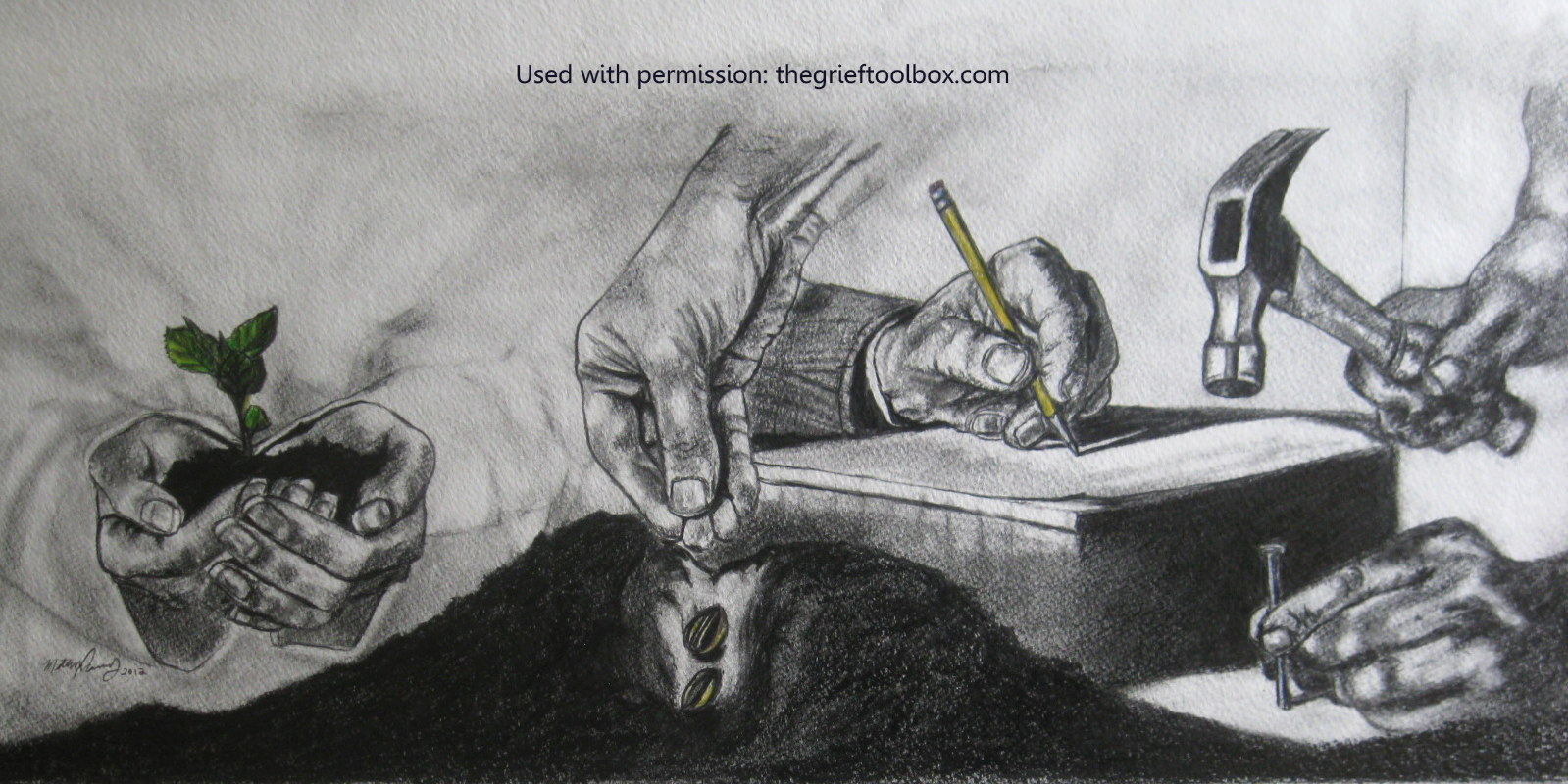
Original drawing I created for and borrowed with permission from www.thegrieftoolbox.com

When my nine year old died in 1987 I was thrust into a dark womb of despair and I felt my system shutting down. How can I possibly survive this? I did not want to, nor did I know how. The foundations of my existence were shaken, “this cannot be happening to me” I said over and over again as though it would somehow awaken me from the nightmare.  For the first time in my life I could use word “surreal” with an understanding of its meaning, as it seemed the only way to describe my waking hours as I experienced them.

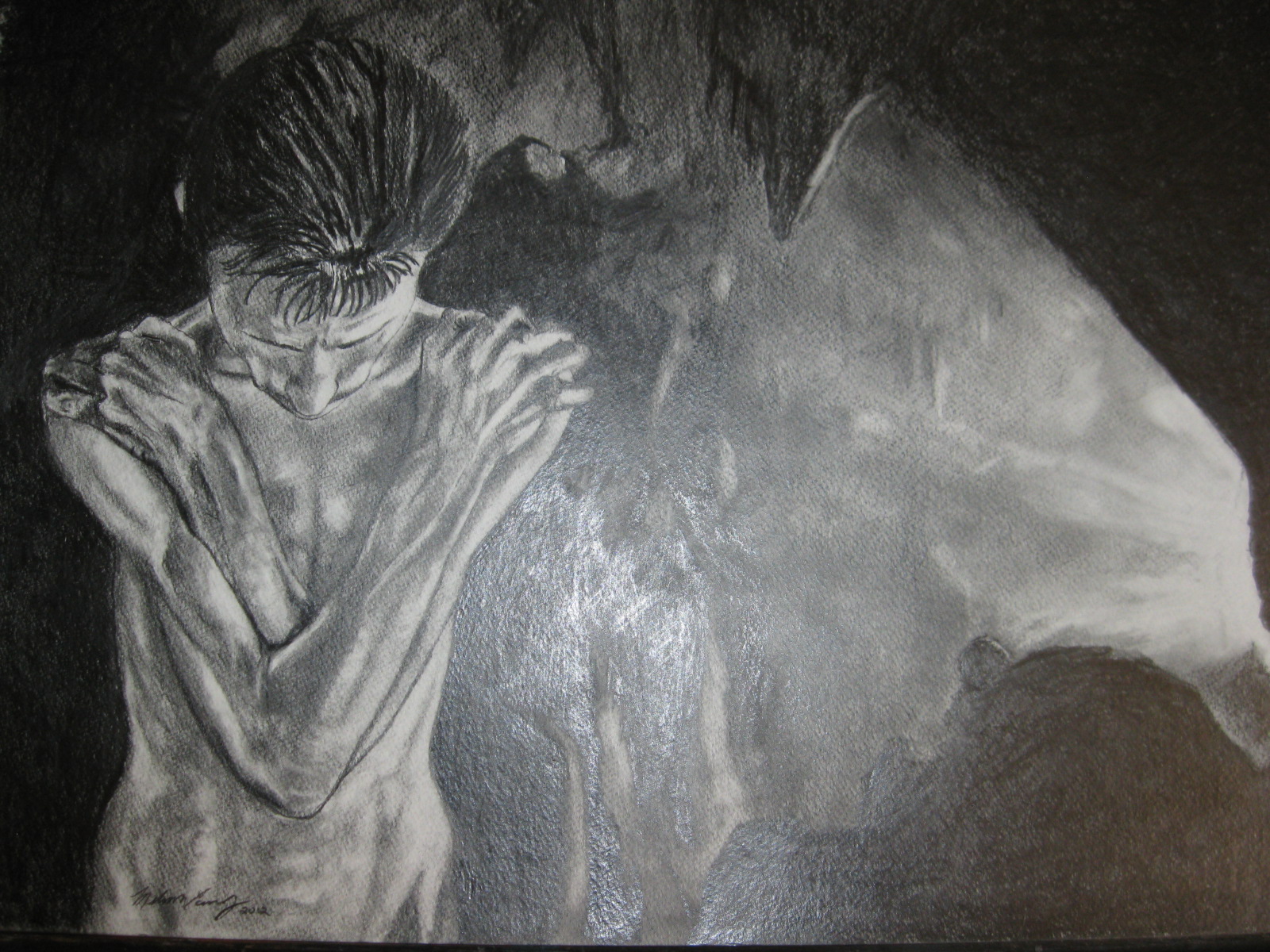
One pivotal day  in those early years of gray I found myself holding myself in a deep soul embrace; I  was really unsure who was in control, yet deep inside from some internal gyroscope I felt a faint harmony  that I had never felt before; a quiet  sacred balance, a moment of new direction, of moment of new meaning. Just a flicker of hope, a spark in the abyss, but it was real. I was stirred from my slumber of dried tears and as surely as a butterfly emerging from its cocoon I said “I need to breathe…I need to fly” and I broke through the chrysalis, a chrysalis that always seemed so imposing but yet I soon discovered to be so very thin.  I emerged a newborn baby into a world of the unknown, and although exhilarated that I could breathe I did not know how to fly…and I was frightened.  I found that I missed the womb of deep grief, its protection, its security and its lostness. I had to rest and dry my wings before I could fly, but fly again I did.

We start over again in real years, in real time following a major loss. What is vitally important in our journey is what we do with those years. I proclaimed to myself “If I am going to start all over again I am going to take risks.  I am not speaking of physical risks, I am not going sky diving or mountain climbing although that may be healing for many, for me it was a needed shift in consciousness. I am going to take emotional risks. At risk of sounding prosaic I wanted my light to shine.

Through grieving my son I have discovered myself and have begun to like what I have found beneath the layers of emotional armor. I am a much better person, more compassionate, a more affectionate person, a more feeling person than I have ever been in my life; I laugh harder; I cry harder.  I take emotional risks to reach out to those in pain. I find it helps my own pain and builds my own hope in the process. It can also provide us a platform for change, our future and the world’s.  We can use the power in our grief to become better or bitter; or we become apathetic and another life is gone. We have choices.

Take the risk to be you, reach out to yourself, and reduce or remove filters (with discretion), express yourself, admit your pain, admit your flaws, admit your misgivings, admit your dreams, admit your joy, admit your potential…admit your gifts.  Use your masks whenever you need to get through a bad day, and to survive -but not every day.  Use your gifts to rebuild your life. Grief is hard work and there is no shame in hard work. It takes guts to be an intentional survivor. As Winnie the Pooh said “You are braver than you believe, stronger than you seem and smarter than you think”.

We as a society and a species we tend to process personal loss from the experiences of those around us processing theirs; it is a skill that is not taught in basic education but only in the school of hard knocks. Death is a natural flow in life and it cannot be denied; we will experience grief every day that we live, it happens.

The death of a loved one in your life is like coming upon an imposing river on your journey. It has no bridge and is deep, cold, dangerous and swift. We have four choices when we stand on its shore, we can try to cross it somehow,  we can try to fight the current and go upstream, we stay on the shoreline or we go with the flow downstream… all valid options. When someone we love dies we find ourselves standing on the shoreline unsure what to do and where we are truly confronted with our own fears and ignorance of the great mystery.

When my son was diagnosed with cancer we came to an imposing river and we chose to go upstream to try and save his life; when he died we went back to the shore and again looked at our options. The shore was not the same shoreline we left; we had no strength to go upstream, no desire to cross to a new shore, so we went with the flow and were open to see where it would take us. That is what I call faith.

When coming to grips with death and dying, our own death or someone we love we come to a crossroads of faith.  We may cling to our religious beliefs with more tenacity than ever before and strive to understand its teachings with a different eye or we may fall away from our faith feeling detached and abandoned. We may even turn our anger toward God for not preventing the tragedy.

We have those that claim God can heal everything with enough faith, including miracle cures and a even resurrection from clinical death. When that does not happen, the most ardent of the faithful may be tested and be at odds with a creator that would not answer their prayers. Often times it is this passionate believer that seems even more frightened of death and fight death as the enemy when paradoxically they strive to live a life with a goal to get to heaven.

On the other hand some say there is no God, and that there are no miracles. Interestingly enough these people that do not believe in a God or an afterlife  often feel just as frightened and alone in regards to death and dying as are some of the deeply devout find themselves .

The angst of death seems most apparent in these extremes of spiritual philosophies.  The more we know the more, the more we know we what we don’t know. The grief experience that we find ourselves in is a new slate, one we did not choose but one in which we have a choice in how we process it into our reality.  We can survive loss but I believe that to truly thrive again, that a belief in a divine intelligence and an afterlife is critical.

Everything in life is in a cycle of polarization, a sine wave to maintain equilibrium with no exceptions; darkness/light; heat/cold; pressure/vacuum; concave/convex on and on ad infinitum. This includes human birth and death. Life is not linear it is a true circle.  Then light at the end of a tunnel is the same on either end.  Going upstream or downstream whether you reach the spring or the delta both are source. There are no real endings only new beginnings.  Basic physics concludes that energy does not die nor is it consumed, it continual reinvents itself.  There is no real death only transformation, which in turn allows for hope of some kind of continued existence beyond our corporal one.

Through the experience of suffering a significant loss in our life, our faith and endurance is tested to its limits. We become are stronger in the broken places or we become crippled for life.  Our grief is an opportunity to use all that we have, and all that we can muster to let our heart light shine; we take the risk to be better than we have ever been. What can hurt us more? We can become bitter or better; we have choices. Grief is the price we pay for love, and it is directly proportional to our investment in that love. Allow that love to continue to give us proceeds as we rebuild our lives proactively by living the loss and not postponing its grief.

Sorrow yields hope when we discover our part of the symphony -is just that; the music goes on and we have the choice to sit it out or dance. I hope you dance.

Peace , love and healing

Mitch Carmody