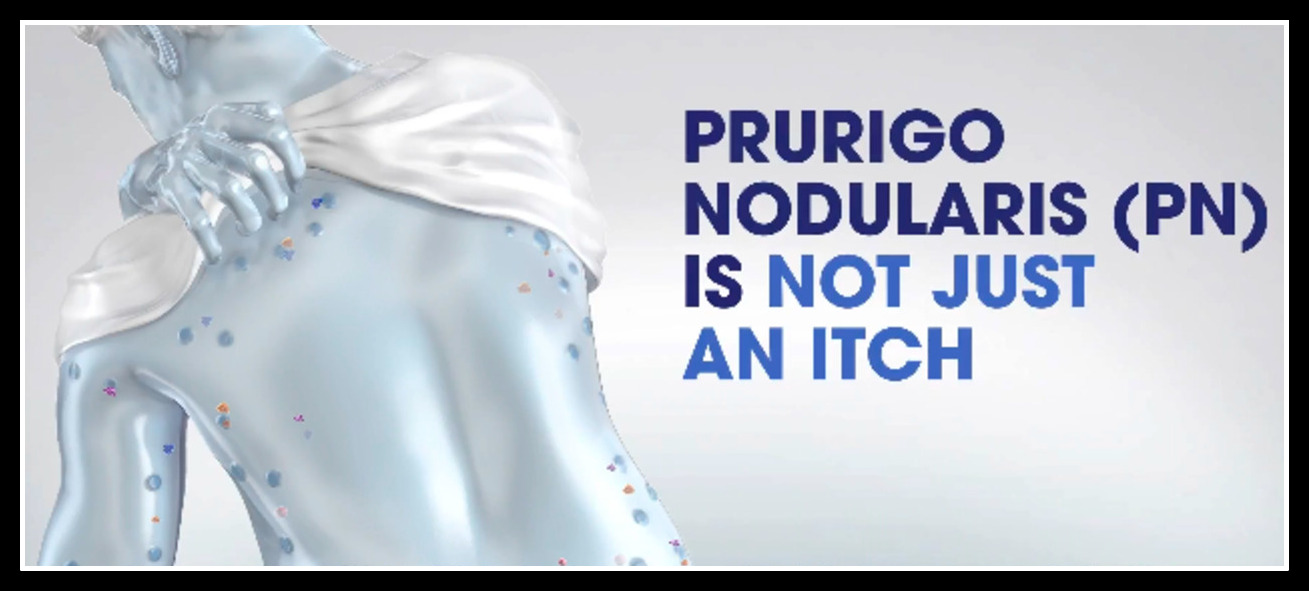
And is not in our heads…
Prurigo Nodularis
Surviving the Diagnosis
Most people do not have a clue about a skin disorder known as Prurigo Nodularis, which is an exceedingly rare skin condition that can suddenly appear in adulthood (usually between the ages 51 to 68 years old). There is no cure; it is usually triggered by some dermal skin assault or injury (e.g., bug bite), medication, food allergies, emotional trauma and or stress. The pathology of its origin is still unknown. It is for the most part a polymorphic reaction to an unknown stimulus attacking our immune system that catalyzes the body to rid itself of toxins and debris from the immune systems counterattack to a foreign invader. A physiological systemic protection reaction that is built into our body’s immune system from epigenetic markers that have evolved and morphed into how our body reacts to our environment and our body’s reaction to that environment through time.
There are many things that PN is and many things it is not and is most often diagnosed as AD or atopic dermatitis aka eczema; a chronic skin condition that makes you itch and leaves red blotches. With PN there is many times a bilateral presentation appearing most prominently on the arms and legs. These areas can spread body wide, and the nodules can ulcerate leaving open lesions that can become infected causing more inflammation and can spread subdermally. They present themselves along nerve fiber pathways of the dermis with inflamed nerve endings that receive skin sensation and can appear in clusters of 3 or more.
It starts with an intense itch with or without a visible bump or spot present spot and from scratching the area it turns in prurigo nodularis, which are basically itch bumps that grow and thrive on being scratched. These bumps can be just a few or hundreds of them, mostly on the arms and legs but almost anywhere on the body except the upper middle back. Sometimes the PN is preliminarily diagnosed by the butterfly sign, the unaffected part of the back that our hands cannot reach to scratch. Most often it is initially seen on the lateral side fore arms, legs or back of the neck but they can literally appear anywhere.
In April of 2020 I had scratched my lower legs from sharp thorns of a buckthorn bush when I was working in the yard. It left small irritating puncture wounds that itched like hell. I was scratching them like crazy but assumed it would eventually heal up. I was wrong. I never did; it got worse; in fact, it spread with lesions/papules/nodules on the lateral side of both forearms/elbows. What the hell ? I assumed I probably had scratched my arms as well, but I found it odd, that the itchy nodules were located on the same bilateral location in an identical linear presentation that seemed to mirror nerve flow patterns that are present in our limbs. How does that happen? Obviously, it is a systemic immune system reaction vs an isolated reaction to a local dermal injury.
I was struck with the fact upon close inspection of an open red and puffy lesion on my leg, how much it looked like a miniature active volcano that had a cooling lava crust forming over the apex of its crater. Just a casual absent-minded scratch to relieve the constant itch can scrape the thin epithelial layer that is continually forming which is trying to the heal the wound and provide an immunological barrier to infection from bacteria and fungi. Scratching it opens it up for infection. Using the same hand with the same fingernails to itch other parts of body spreads the infection and bacteria that is already under the nails. Continually scratching ascorbates infection in active nodules and spreads the condition elsewhere seeding infection where nails microscopically break opening the surface of the skin.
The is much unknown about the mechanisms of the scratch/itch cycle; a classic immunological “chicken or the egg” theory of genesis of the origin of these papules of pain and itch. They do not know how to cure or prevent PN; with a plethora of antagonists that can illicit the response which is different for everyone can be challenging to physicians to provide a ubiquitous treatment to minimize outbreak and treat active lesions.
I have done much research academically as well as a plethora of treatments with lifestyle and diet changes. I wanted to boil the information down for the average person to better understand the condition should they find themselves challenged with PN. Much of the literature is biased with it being speculated as a Psychoneurological disorder distinguish by uncontrolled scratching, scab picking, anxiety, stress, and emotional trauma. The trouble is so many who have this unknown condition and are the continual lifestyle change adaptations to find relief and to minimize eruptions. Old, healed lesions leave permanent cell structure changes and resemble craters of the moon. Stress and or environmental antagonists can awaken this slumbering papule volcanoes, no longer dormant the scratch ich cycle begins again.
Before I was diagnosed with PN, I had noticed other odd symptoms the year prior that may or may not be related but I raised the question to my doctor about them. Old scar tissue around my body spontaneously started to get red, sore and erupt and eventually bleed and create scabs. Ear piercings from 40 years ago, abandoned, and unadorned for years started to bleed and become enflamed. A leg scar from a childhood injury started to bleed and become enflamed. I had recurring pimples in my eyebrows that would come and go in the same locations on both eyebrows and a persistent non healing lesion next to my ear. The doctor recommended seeing a dermatologist.
This was my first visit to a Dermatologist, and she said the spot on my ear was most likely basil cell carcinoma and performed Moe’s surgery on the spot but did not even address the “ matching pimples” in my eyebrows. She froze a few suspicious spots on my arms and set up me up for another appointment in 6 weeks. I asked her about the non healing bumps on the back of my neck, she said it was not cancer but probably irritated hair follicles from wearing a bandana, which I wore most of the time. Made sense, I quit wearing the scarves. They eventually abated but took an exceptionally long time.
The basil cell spot healed up fine, they had dug out a spot as big as my thumb and it never came back. I am not even sure it was basil cell as it was never confirmed by biopsy. They recommended more appointments, their recommended lotions, etc. and they wanted to monitor my condition on an ongoing basis. This felt strangely like a visit to an overzealous chiropractor. I opted not to return.
I had read in research that using “ frankincense oil can help irradicate skin lesions and particularly effective with basil cell. I started applying it daily and by God the eyebrow lesions disappeared and never came back. Every action as a reaction of course and using the frankincense on my bleeding ear piercing inflamed it even more and the whole lobe was puffy and sore with scaly skin.
My 2nd visit was to a different dermatologist was some six months later for my ear. I was diagnosed with Atopic eczema which was most likely from a reaction to the frankincense and was advised to quit using. I did and it cleared up slowly. I assumed I over did it, but at least now I was lesion free.
My third visit to the dermo doc was almost a year later after I had scratched my legs on the buckthorn in April 2020. The buckthorn scratches would not heal and started to get more itchy spots on my other leg and on my forearms of both arms. I had assumed from smaller scratches I had not noticed before. It was getting worse every week and finally made another appointment.
This time the dermo doc brought in a few other specialists to look at my legs. Through research I was convinced I had contracted “ rose handler’s disease” from the thorn punctures that carries the fungus into the blood stream through the open wound. The body reacts to the fungal invasion with eruptions. It becomes systemic and unyielding unless it is treated with antifungal agents, topical and or internal. They however discounted my web MD diagnosis and did a punch biopsy of several active lesions and told to return in 3 weeks. I was prescribed Triamcinolone steroid cream to apply 3x daily to the active lesion areas, but overuse can cause thinning of the dermis and may be more susceptible to microscopic wound infections from scratching. The cream reduced the lesions dramatically but not altogether and came back when I ran out.
My fourth visit to dermo doc to get biopsy results. They said it was NOT rose handler’s disease and although that may have initiated it, it did not show up in biopsy. What they did diagnose however was Lichen Simplex Chronicus with Prurigo Nodularis, a rare basically incurable autoimmune disease, treatable with difficulty but not curable. WTF ? It was then that they started speaking to me in soft whimsical tones, smiling at me like I was a child, or some kind of nut and say it was a psychoneurological disease brought on by anxiety and stress and to just try not to scratch so much. They gave me a stronger steroid this time called Clobetasol Propionate for stubborn lesions. Quit scratching so much what a novel idea, thank you so much for that, it never crossed my mind.
The skin hack when on to say take daily antihistamines to reduce the itching, soak in a tub daily with a bleach bath and prescribed some hydrating cream that was off the charts expensive and not covered by insurance. In addition, I was to come back to the clinic 3x week for UVB light therapy sessions for at least two months. More and more like a chiropractic office; First, I cannot tolerate antihistamines that enlarge my prostate, secondly, I am not paying $ 400 for jar of Noxzema with colloidal silver in it. Thirdly I am not going to bathe in bleach every day, it is excessively drying to the skin as well as killing ALL the bacteria , the good and the bad. Dry skin is our critical nemesis. Fourth, I am not driving 40 minutes each way three times a week for 10 minutes of light therapy. I left frustrated and befuddled. Are you kidding me?
My whole life was changed and turned upside down from a flipping scratch on my leg.
I had to dig deep into to this malady and to find out more about it. I was shocked to find out the wealth of knowledge that does not exist about this disease. Most General Practitioners are clueless. Most dermatologists only have expensive time consuming options to minimize symptoms without a cure.
I did find information from conducting medical research worldwide and found many commonalities with the disease yet just as many variables. I then discovered both the Nodular Prurigo International Facebook and the Prurigo Nodularis International group each with over 4,000 sufferers/members of this abhorrent disease who find common ground and support.
My journey now began to try and beat this disease in earnest; this blog is an attempt to share my findings that I extracted from research and testimonial data from other PN sufferers.
Symptoms
Symptoms can be all over the map but mostly involving pruritis (itching) and the formation of nodules and tender papules of pain and scarring almost anywhere on the body but commonly on the extremities often in bilateral symmetrical outbreaks on both sides of the body. The nodules new and old itch, ulcerate, scab up and itch some more, increased scratching and scab picking only worsens and exacerbates the condition. Many lesions will have a center core which is like a root like filament of white collagen that is sensitive and when touched induced pain and intense itch.
Diagnosis
PN can be misdiagnosed as many other skin conditions as possible and is often overlooked and undiagnosed until and biopsy is performed. The list of what it might be but is a very lengthy list of skin conditions written in a series of Latin names that cause itch and inflammation and is more confusing than helpful.
Try to stop picking!
PN sufferers are SO SICK OF HEARING THIS!!! Simply just stop scratching YIKES really? We have more neurons in our body than our brain; it’s our body brain reacting to “something” causing a sharp localized itch sensation and it erupts bilaterally on both limbs simultaneously causing more itch….. IT IS NOT in one’s head to feel like your arm is the one that they used in the mosquito repellant test chamber experiment that failed.
It is not in our frigging head, the inflammation comes first from somewhere, something, the need to scratch comes second and it is almost autonomic to scratch. Too much scratching can infect it making it worse and builds up a callous like material like on your heel, when you itch in and around it, it stimulates more skin receptors nearby to inflame and erupt nerve endings to burst through the skin with collagen fibers that itch like hell….and in almost quantum physics like manner they appear on the opposing limb at the same spot.
Mindfulness helps immensely to control reaction to itch, covering the areas with a liquid bandage deters autonomic itching getting to the lesion edges and most of all is finding that personal environmental unique trigger that initiates an immune response. Antihistamines is not the answer for most PN sufferers, they only aid in controlling histamine itch and the pain/sharp itch known as “cowhage itch” is present as well and it does not react to antihistamines to reduce itch.
It is a continue battle …to find what triggers the itch in the first place, the classic chicken or the egg, it starts with something that cause an immune response on the largest organ of our body, but it is not in our head. They must teach in medical school that PN is in our head, you can tell when a physician starts to talk to you like a 3 year old but without giving you a lollypop, and you know what they are going to say.
Scratching/Picking
The space under your fingernails is completely impervious to the best, most simple means we have of preventing the spread of diseases. The research clearly shows that the space between the skin and nail creates a perfect environment for the growth and proliferation of minute life forms, thanks to both the physical protection provided by the nail and all that moisture. Old fake nails and the minute cracks in aging fingernail polish harbors even more bacteria. Findings show that persistent scrubbing doesn’t completely sterilize the hand, as the findings from their study show that there are significant numbers of bacteria left under the nails.
Think about it: the space under your fingernails is completely impervious to the best, and simplest, means we have of preventing the spread of diseases.
The chronicity of any disease has a profound impact on the psychosocial well-being of the sufferer. Prurigo nodularis is one such condition that remains as an enigma in the modern dermatology. The effects of this disease, on the body as well as the psyche of the patient has disastrous outcomes. The current management of this disease in the modern medicine is purely symptomatic and comes with all its demerits. Drugs used for relief are mere rescue drugs.
New information is coming out, basically every day, but one concept that is getting more and more attention is the natural physiological reaction called a cytokine storm. As with any storm, the cytokine variety can range in intensity from mildly discomforting to deadly. Put simply, a cytokine is a signaling molecule that is secreted by immune cells to stimulate some sort of action in the body. Any time our immune system is called into action, whether to fight infections or repair injuries, these cytokines help begin the process. There are many types of cytokines, capable of stimulating or stopping inflammation, as the body calls for. This makes cytokines vital to fighting and recovering from just about anything the world can throw at us.
The problem with these particular signaling molecules is that in some cases the inherent “shut off valve” in the body doesn’t work. This means that what can start as a gentle shower of response can very rapidly increase 1000x into a sudden, severe storm. This storm triggers a continuous reaction that overwhelms the body leading to severe itch of our body’s largest organ, our skin.
There are several compounds found in foods that have been proven to reduce the cytokine chain reaction. Specifically:
Quercitin: found in apples and onions
Resveratrol: found in purple grapes and blueberries
Curcumin: found in turmeric
Allicin: found in garlic
Sulforaphane: found in cruciferous vegetables
Specialized Pro-Resolving Mediators: found in foods high in essential fatty acids like fish and roe, fats such as olive oil and avocado
Fruits: cherries, pomegranates
Vegetables: Soy, fennel
Herbs and Spices: Basil, rosemary, cloves, ginger, cinnamon, capsaicin, cayenne, anise
Seeds: Flax or sesame
Other items such as: chocolate (!), honey, or nutritional yeast
Tea: rooibos or green
Topical Treatments
Moisturize, moisturize, moisturize. Dry skin is our nemesis to healing and prognosticator of itch. We cannot lube our skin enough. Steroids can help to heal lesions but they also thin the skin which then breaks open easier when scratched and then is more susceptible to further infection.
Our skin does not readily absorb water or moisture it sheds it. A small about may be absorbed in the epithelial layer when bathing and why important to apply oil, cream etc to seal in moisture directly after bathing/showering (within 30 minutes)t. Moisturizers do not moisturize as much as they seal in the skins own moisture. Simple oils such as castor oil, cocoa nut oil, cocoa butter, vitamin E and other nutritional oils are preferred over any commercial expensive emollients with tons of chemical ingredients.
Prurigo nodularis is an orphan disease with no standardized diagnostic or treatment regimen and has been understudied compared to other inflammatory skin diseases. Given the highly pruritic and chronic nature of this disease, there are very high rates of associated anxiety and depression among PN patients. These quality of life issues are compounded by the poor management of patients and lack of effective therapies. PN is a chronic inflammatory skin disease that often has an immense psychosocial impact on patients’ quality of life.
I wear baggy light material sweat pants, and baggy long sleeve shirts. Tight clothes make me itch, and wool sweaters long gone for many years. I used to love to wear just shorts and a tank top and still do so for my daily sun therapy. I wear the long clothing as it stops me from autonomically scratching as we do in our sleep, and why I now wear long loose pajamas as well. We scratch at night with absolute no control over it and wake up with agitated lesions/fresh scabs and intense itch. If we can break the scratch/itch cycle enough during the day, the brain creates new neural pathways over time that scratches less…..this overrides the itch urge at night. It takes at least 60 days of repeated behavior change to establish new neural pathways, the science is sound, but resisting the itch incredibly challenging but it can be done over time.
We are stuck with this for life, the best resilience model we have is enough sleep when our body restores its immune system. Now wearing my Fitbit 24/7/ 365 I have seen a pattern in break outs that correlates to my lack of sleep. Break outs minimal when I have at least 7 hours of sleep. Anything less than 5 hours a night, especially consecutive sleep deprived nights or too much party time the morning itch/ break outs are markedly worse. Our body become anxious without restoration. Anxiety creates stress and stress always makes PN worse.
The most current methodology in treating this condition I have found by happenstance is called Earthing which has me almost cured. In less than a month of Earthing my skin had improved dramatically by simply grounding to the earth as much as possible. There is a whole science behind it that advocates being grounded with grounding mats, sheets etc. and walking barefoot as much as we can to reduce the bodies static charge and to allow free electrons to flow into our body to reduce inflammation.
We are multi faceted creatures and we usually our own worst enemy. We need to ferret out those components in our life that is our own antagonist and find that common ground that provides healing which just may be as easy as a barefoot walk on the beach, and within our reach whenever we are grounded.
Note: Hugging a living tree for 30 minutes is a great way to ground and very effective as well. Most doctors think we are nuts anyway so what the hell. “Physician Heal thyself” Luke 4:23
 Proactive Grieving Blog from heartlightstudios.com
One thought on “Prurigo Nodularis Surviving the Diagnosis with Earthing”